

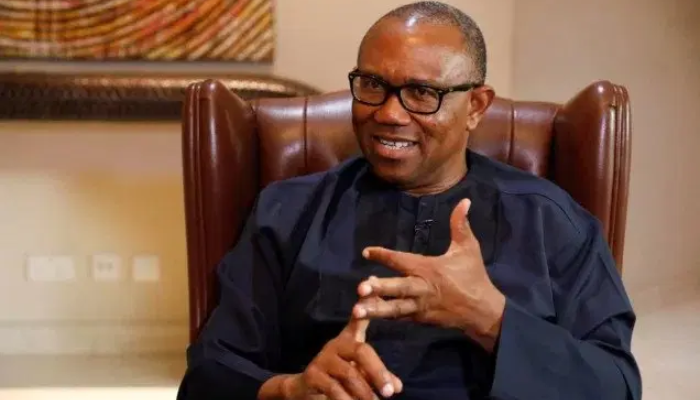
Peter Obi, former presidential candidate of Nigeria’s Labour Party, has called on African governments to prioritise investments in human capital and increased productivity. He stated that this is key to shielding the continent from global trade disruptions, especially if Donald Trump returns as President of the United States.
Obi made this statement on Tuesday during the Plenary Session of the Commonwealth Enterprise and Investment Council (CWEIC) Trade and Investment Summit 2025 in London.
Read also: Canada imposes 25% tariff on US cars in retaliation to US trade measures
Africa’s role in a shifting global economy
Speaking on the summit’s theme, Africa’s Role in the New Global Economy, Obi said the continent’s future depends on how effectively it utilises its youthful population and abundant natural resources. He noted that Africa must act now to secure its place in the changing global trade system.
He warned that Africa had not adequately responded to global shifts in trade, some of which were sparked by protectionist policies implemented during Trump’s first term.
Read also: Mobile money transactions reach $1.68tn in 2024 – GSMA report
Africa’s limited share in global trade
Quoting data from the World Trade Organization, Obi said: “Despite its vast opportunities, Africa’s share of global trade remains at a paltry 2–3%, with its GDP share at about 3%.”
He went on to highlight Africa’s low GDP per capita in comparison to other regions. “Africa’s GDP per capita stands at just $1,900, compared to about $9,000 in Asia,” he said.
Read also: PalmPay launches new debit card in Nigeria in partnership with Verve, targets 35m users
Untapped population and resources
Obi noted that although Africa is the second-largest and most populous continent, with a population of 1.5 billion and the highest concentration of working-age individuals, these demographic advantages are not yet driving economic competitiveness.
He stressed the need for long-term planning, stating that unlocking Africa’s potential will depend on how much is invested in its people.
Read also: PalmPay launches new debit card in Nigeria in partnership with Verve, targets 35m users
Opportunities in agriculture and mineral resources
According to Obi, Africa has close to one billion hectares of uncultivated arable land and over 30% of the world’s mineral resources. These, he said, remain largely underutilised.
He pointed to agriculture as one area where Africa could rapidly expand its productivity. “Africa’s food and agriculture market, currently worth $280 billion annually, is projected to surpass $1 trillion by 2030,” he said.
Read also: iSON Xperiences appoints Ricardo Langwieder as Chief Sales Officer
Call for proactive policy and investment
Obi concluded with a warning and a challenge to African leaders to act before external shocks hit. He said the time to prepare is now, and doing so requires more than words.
He called for a shift towards policies that build human capital, support enterprise, and develop critical infrastructure across the continent.