

The fourth edition of the Annual West Africa and Sahel Youth Forum took place in Dakar, Senegal, from 26 to 28 August 2025. The three-day gathering, organised by the United Nations Office for West Africa and the Sahel (UNOWAS) and the International Labour Organization (ILO), focused on the theme “Employment and education in emergencies for young women and men: building a peaceful and safe West Africa and Sahel”.
Read also: FG, youth groups partner to strengthen SMEs, community
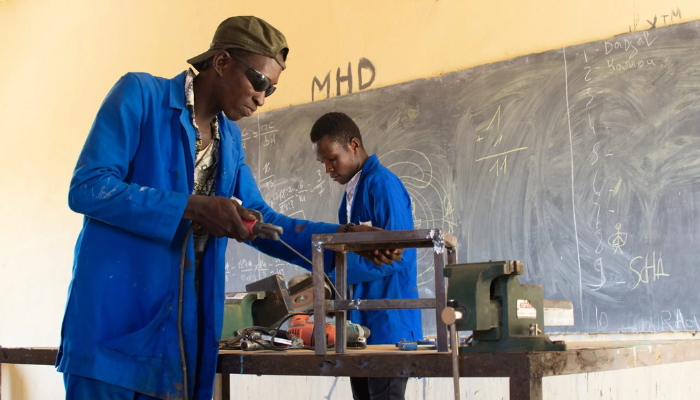
Nearly 150 participants attended the forum, including young people, representatives of governments, regional organisations, workers’ and employers’ groups, civil society, and international partners from 17 countries. Discussions centred on employment, vocational training, education in crisis contexts, migration, and the role of young people in shaping public policy.
Read also: Nigerian SMEs look abroad as UAE and Singapore lead in wealth security
Youth at the centre of policy and development
The forum was opened by key dignitaries, including Assane Diallo, Director General of Youth, representing Senegal’s Minister of Youth, Sports and Culture, Khady Diène Gaye. Also present were Barrie Freeman, Deputy Special Representative of the United Nations Secretary-General for West Africa and the Sahel, and Coffi Agossou, ILO Deputy Regional Director for Africa.
In his address, Diallo highlighted the demographic reality of the region. He noted that “more than 65% of the population of our West African and Sahelian space is made up of young people” and described this as both “a challenge and an opportunity.” He urged participants to “make this meeting a springboard for action” while reaffirming Senegal’s belief that “the destiny of Africa is played out with and by its youth.”
Read also: FT Africa Summit 2025 to highlight SME innovation and growth
Risks of exclusion and missed opportunities
Freeman underlined the risks of exclusion from peace and development processes. She said, “the meaningful inclusion of young people in peacebuilding processes brings multiple benefits: social, political and economic.” She cautioned against the precarious conditions affecting “72% of young workers in sub-Saharan Africa” and noted that “more than 14,000 schools are closed, depriving 2.8 million children of their fundamental right to education.”
Adoption of the Dakar Youth Compact
At the conclusion of the forum, participants adopted the Dakar Youth Compact, a document outlining priorities for the region’s youth. The compact calls for greater efforts to create decent jobs and to guarantee access to quality education and training, particularly in contexts of crisis and displacement.
Speaking on behalf of the ILO, Agossou described the compact as “a clear roadmap adapted to the realities of the region.” He stated that the organisation would continue supporting governments, social partners, and young people through strengthened employment policies, business growth, and skills systems. He added that these commitments are aligned with the AU-ILO Youth Employment Strategy (YES-Africa), which places youth at the centre of Africa’s economic and social transformation.
Next steps and engagement with governments
Following the forum, a delegation of young participants presented the outcomes, including the Dakar Youth Compact, to Senegal’s Minister of Youth, Sports and Culture, Khady Diène Gaye. This step signalled a commitment to ensuring that the voices of young people are reflected in national policies.
The forum closed with a renewed call for governments and partners to engage with young people as central actors in peace, development, and resilience across West Africa and the Sahel.