


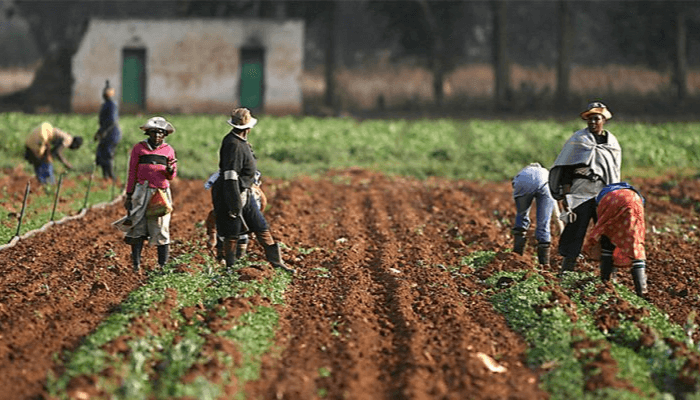
Nigeria’s agriculture sector contracted in January 2026 as rising input costs, insecurity and weak access to finance disrupted farming and agro-allied activities, according to the latest Business Confidence Monitor (BCM) released by the Nigerian Economic Summit Group (NESG).
The BCM is a survey-based report that tracks business sentiment and short-term expectations across sectors of the Nigerian economy.
Data from the report show that the agriculture Business Performance Index fell to 99.5 points in January, down from 112.9 points in December 2025. An index reading below 100 indicates contraction, making January the sector’s weakest performance since August 2025.
“This performance represents the weakest level since August 2025, primarily driven by a contraction in livestock and agro-allied sub-sectors, as well as muted performance in crop production,” the report stated.
Read also: PayPal returns to Nigeria with $100m fund to tap booming fintech sector
Livestock and agro-allied activities decline
The contraction was driven largely by a drop in livestock and agro-allied activities, both of which recorded index scores of 97.9 points. This reversed the modest recovery seen in December.
Crop production also slowed during the month, while forestry hovered around the neutral threshold. Fishing was the only sub-sector that remained in expansion territory, posting an index score of 103.2 points, although this marked a weaker performance compared to the previous month.
The report noted that performance across the five agricultural sub-sectors remained mixed.
Read also: Nigerians task FG, states on proper deployment of tax revenue
Agriculture lags wider business environment
The decline occurred despite the broader business environment remaining in expansion. Manufacturing, services and non-manufacturing sectors all recorded index readings above 100 points in January.
Agriculture, alongside trade, was one of the two sectors that contracted during the month, highlighting growing pressure on food production and related value chains.
NESG attributed the sector’s weak performance to insecurity in farming communities, limited access to credit, unstable electricity supply and gaps in transport and storage infrastructure.
Read also: Global capital returns, Africa is left waiting as FDI falls 38%
Rising costs squeeze farm operations
Cost pressures increased sharply during the month. The BCM’s cost-of-doing-business index rose to 90.5 points in January from 54.7 points in December 2025. Input prices also climbed to 96.9 points from 68.9 points.
The report linked the increase to fuel price changes, tax reforms and ongoing inflation.
For agriculture, which depends on energy, transport and imported inputs, these costs reduced margins and weakened confidence among operators.
Read also: Nigeria’s music industry hits $1 billion valuation as global demand expands
Outlook remains cautious
The NESG Future Business Expectation Index for agriculture stood at 110.2 points, showing lower optimism compared with manufacturing and non-manufacturing sectors, which recorded 155 and 140 points respectively.
While businesses expect currency stability and policy support to improve conditions, NESG warned that election-related uncertainty and policy inconsistency could slow recovery.
Analysts said the contraction points to the need for targeted support to stabilise food production, reduce input costs and improve rural security, as agriculture remains central to employment and food supply in Nigeria.