

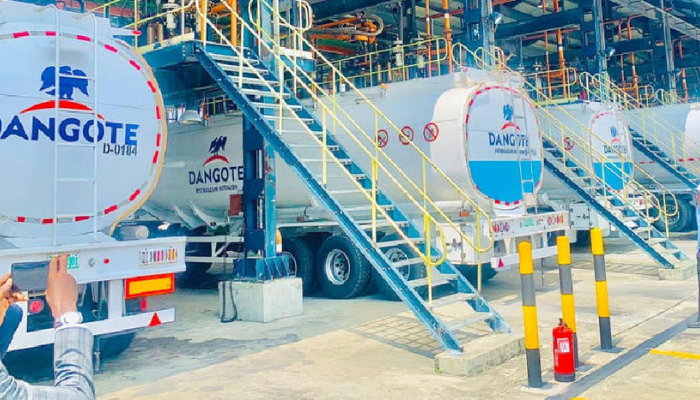
Nigeria’s petrol supply structure is undergoing a shift as domestic refining capacity expands with the operation of the Dangote Petroleum Refinery. The refinery has increased local production of refined petroleum products and now plays a major role in supplying petrol within the Nigerian market.
For many years Nigeria relied heavily on imported fuel to meet domestic demand. The launch of large-scale refining capacity has reduced reliance on imports and changed the structure of the downstream petroleum sector.
Industry stakeholders say the refinery’s increasing supply capacity could influence pricing patterns and supply stability across the country.
Read also: Nigerian exporters warn shipping disruptions could affect trade operations
Market structure raises industry questions
Energy analysts note that Nigeria’s petrol market represents a large share of the country’s energy economy. The ability of a single refinery to produce a high volume of fuel has led to discussions about how the supply structure may evolve in the coming years.
Some stakeholders believe strong domestic refining capacity is important for national energy security. They argue that local production can reduce pressure on foreign exchange used for fuel imports.
Others say regulators will need to ensure a balanced supply environment that allows multiple operators to participate within the market.
Stable fuel supply remains important for Nigeria’s economic activities.
Read also: Nigerian stock market movement reflects cautious investor sentiment
Impact on SMEs and business operations
Petrol and diesel remain major operational inputs for many businesses across Nigeria. Small and medium-sized enterprises in manufacturing, agriculture, logistics, and retail depend on fuel to power equipment, transport goods, and maintain daily operations.
Changes in fuel supply structures may therefore influence operational planning for many businesses.
When supply becomes stable and predictable, SMEs can plan transport schedules, production timelines, and delivery operations more effectively.
Read also: Financial institutions to lead Dangote Refinery listing on NGX
Industry monitoring expected
Energy sector analysts say government regulators will continue monitoring developments within the downstream petroleum industry.
Maintaining a supply environment that supports stability, competition, and investment will remain an important factor for the long-term development of Nigeria’s energy sector.
Reliable energy supply supports the growth of businesses across multiple sectors.