

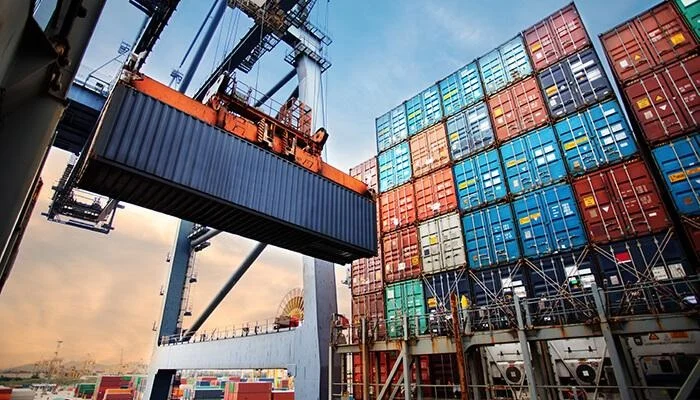
Persistent disruptions to global supply chains across 2026, driven by geopolitical tensions from the Middle East conflict, renewed Strait of Hormuz uncertainty, and broader trade route fragility, have reinforced the urgency of Nigeria’s push to diversify its export base beyond crude oil, the Nigerian Economic Summit Group has said.
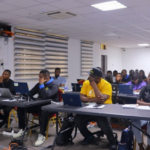
Speaking at the Nigerian Industrialisation and Competitiveness Forum in Lagos on Wednesday, NESG Chairman Olaniyi Yusuf described the global trade environment as one that is actively reshaping how African economies must think about their productive capacity and export strategies.
Read also: Polaris Bank, NACCIMA inaugurate Export Express Support Centre to scale non-oil trade
The supply chain disruption context
Nigeria has experienced the downstream effects of 2026’s global supply chain pressures in direct and measurable ways. The US-Iran conflict that began in February drove global crude prices above $100 per barrel, pushed petrol prices in Nigeria to N1,300 per litre, increased the cost of imported raw materials and components, and tightened the foreign exchange conditions through which businesses pay overseas suppliers.
While the brief US-Iran ceasefire in June provided temporary relief, the subsequent collapse of the truce over Hormuz control has returned upward pressure to global oil markets. NESG researchers noted that supply chain disruptions have now become a recurring feature of the global trade environment rather than an exceptional event, and that countries with diversified export and production bases are consistently more resilient to their effects than those heavily dependent on a single commodity.
A country that earns 90 per cent of its foreign exchange from crude oil is not just an oil-dependent economy, it is an economy whose entire import capacity, reserve position, and investment climate fluctuates with decisions made by geopolitical actors thousands of miles away. That is not a manageable risk. It is a structural vulnerability.
Read also: Non-oil export revenues set record in 2025, driving diversification efforts
What diversification requires
The NESG’s prescription at the forum was consistent with positions the group has advanced across multiple platforms in 2026: patient capital mobilisation, stronger manufacturing competitiveness, improved SME access to export financing, and a policy environment that rewards value-added production over raw material extraction.
Ogebe’s H2 Outlook pointed specifically to manufacturing as a sector expected to sustain growth momentum in the second half of 2026, as lower inflation and improved foreign exchange liquidity ease production constraints that have held back many manufacturers. Agricultural exports remain an underdeveloped source of non-oil earnings, particularly given China’s zero-tariff policy extension to qualifying Nigerian goods announced in August.
Read also: Nigeria’s non-oil exports rise 21% as diversification efforts gain traction
The SME dimension
For Nigerian small businesses operating in processing, manufacturing, agribusiness, and creative industries, the NESG’s message carries practical weight. The same global supply chain disruptions that raise the cost of imports also reduce the cost of inputs for domestically oriented producers relative to import-dependent competitors. Businesses that can source locally, produce locally, and sell both domestically and to regional markets are structurally advantaged in a disrupted global trade environment.
Every global supply chain crisis is an industrial policy argument for building local capacity. Nigeria has been making that argument in policy documents for decades. The NESG’s intervention at the Industrialisation Forum is a call to stop arguing and start building.