


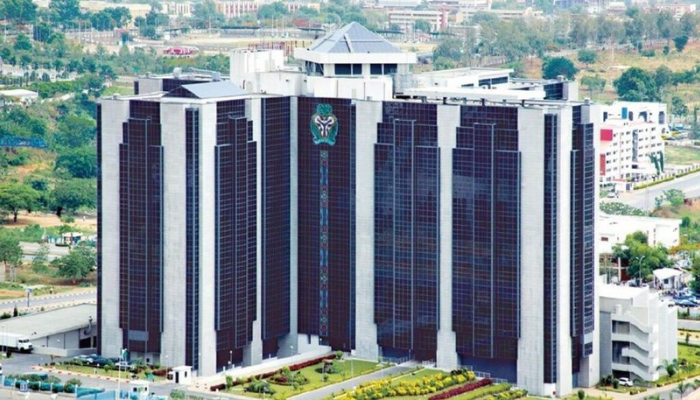
The Central Bank of Nigeria has announced plans to recapitalise and restructure development finance institutions as part of a concerted effort to close a N130 trillion funding gap facing micro, small, and medium-sized enterprises across the country. The announcement was made by CBN Deputy Governor for Economic Policy, Muhammad Abdullahi, during a panel session at the launch of the World Bank’s Nigeria Development Update in Abuja on Tuesday, 7 April 2026.
Read also: Nigerian banks complete N4.65 trillion recapitalisation as CBN eyes SME lending boost
The scale of the problem
A recent CBN review of Nigeria’s development finance landscape found that the combined asset base of all existing development finance institutions stands at just over ₦8 trillion — a fraction of the N130 trillion estimated to be required to adequately meet MSME credit demand. The institutions in question include the Bank of Industry, Development Bank of Nigeria, Bank of Agriculture, Nigeria Export-Import Bank, Federal Mortgage Bank of Nigeria, and the Nigerian Consumer Credit Corporation.
The gap between what these institutions hold and what the sector actually needs is not marginal — it is a structural failure that has quietly constrained millions of Nigerian businesses for years.
Read also: Foreign investment inflows into Nigeria surge 90% to $23bn in 2025
Why capital injections alone will not work
Abdullahi was explicit that recapitalisation without structural reform would not solve the problem. The CBN’s position is that DFIs must be repositioned to become genuinely bankable and investable — capable of attracting private capital rather than relying solely on government funding.
The apex bank and the Federal Ministry of Finance are jointly reviewing DFI structures to improve governance, strengthen risk management frameworks, and introduce more market-based principles into how these institutions operate. The goal, as Abdullahi put it, is to correct incentives and improve risk appetite across the sector.
The way development finance has been done in the past has not worked. Structural change — not just more money — is what the system requires.
Read also: EU launches €290m funding package for Nigerian SMEs
How recent banking reforms fit in
The DFI overhaul follows the completion of Nigeria’s banking sector recapitalisation, which saw 33 banks raise a combined N4.65 trillion by the March 31, 2026 deadline. The CBN expects that stronger commercial bank balance sheets will also improve the flow of credit to businesses, as the fresh capital generates pressure on institutions to deploy funds into return-generating assets.
Abdullahi was careful to note, however, that the CBN does not intend to direct banks administratively on where to lend. Financial institutions must continue to conduct independent risk assessments. The combination of better-capitalised commercial banks and reformed DFIs is intended to create conditions where credit naturally flows more freely to underserved sectors.
Read also: Dollar strengthens against naira at start of new business week
What it means for Nigerian SMEs
Access to affordable finance remains the single most cited barrier to growth among Nigerian small businesses. High interest rates, strict collateral requirements, and limited reach of development institutions have kept many SMEs either out of the formal credit system entirely or dependent on expensive short-term borrowing.
If the restructuring delivers on its objectives, the benefits for small businesses could be significant — lower-cost credit, expanded loan availability, and access to development finance products designed for the real sector rather than large corporations.
For Nigerian entrepreneurs, the announcements are a step in the right direction. Whether the reforms translate into funding that actually reaches small businesses will depend on the quality of execution and the government’s commitment to seeing structural change through.