

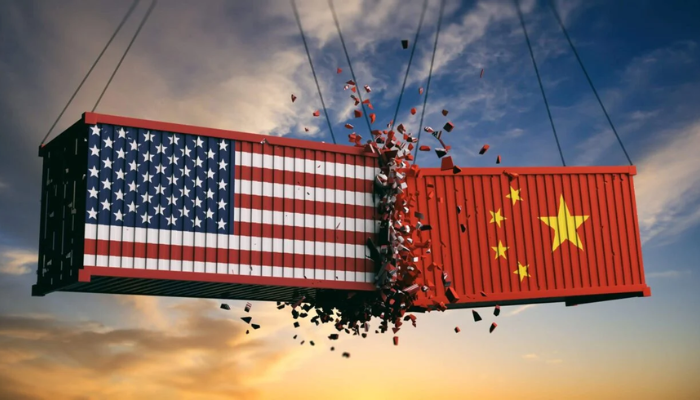
China has announced a 34% tariff on all imports from the United States, effective 10 April. This decision follows the United States’ recent move to implement its own 34% tariff on Chinese goods. The US policy was introduced by President Donald Trump earlier this week as part of his “Liberation Day” economic package.
The latest tariffs add to existing duties, increasing the total cost of tariffs on some items to at least 54%. The escalation has raised alarms among global investors and business owners, particularly small and medium-sized enterprises (SMEs), which depend on international trade.
In a statement, China’s Ministry of Commerce described the US action as a “unilateral bullying practice” and stated that it poses a threat to the global trade system. The ministry confirmed that China has submitted a formal complaint to the World Trade Organization (WTO), accusing the US of violating multilateral trade rules and undermining the rights of other countries.
Read also: Macron urges French SMEs to pause US investments amid rising trade tensions
Export restrictions on critical materials
In addition to the tariffs, China has announced new restrictions on the export of certain rare earth elements. These include samarium, used in aerospace and defence, and gadolinium, which is essential in medical imaging, such as MRI scans.
These measures are expected to affect key global industries including technology, healthcare, and manufacturing. Businesses that rely on Chinese exports of these materials are likely to face new disruptions.
Read also: Antigua and Barbuda Backs global push to protect oceans, strengthen fisheries and support SMEs
Sanctions and import suspensions
China also suspended chicken imports from two American companies—Mountaire Farms of Delaware and Coastal Processing—after banned substances were reportedly found in their shipments. The government has added 27 American firms to its sanctions list, targeting companies involved in logistics and defence-related technology.
Earlier this year, in February, China had already imposed a 15% tariff on US coal and liquefied natural gas. It also added a 10% tariff on crude oil, agricultural machinery, and large-engine cars. The latest announcement now expands coverage to all American-made products, including pharmaceuticals, petroleum gas, LNG, and agricultural exports.
Read also: South Korea’s financial institutions step in to shield SMEs from US tariffs
Global markets react
The market response was swift. The S&P 500 dropped by 4.8%, its largest decline since June 2020. The Nasdaq 100 fell 5.4%. European markets also experienced losses, with Germany’s DAX dropping nearly 5%, France’s CAC 40 down 4%, and the UK’s FTSE 100 shedding 4.3%. Futures continued to trend downward.
This downward movement reflects investor concern over the widening trade dispute between the world’s two largest economies and the possible long-term impact on global growth.
Read also: Global SMEs face strain as Trump maintains tariff pressure
SMEs face rising uncertainty
The new tariffs and restrictions have placed additional pressure on SMEs across both countries and in other regions connected to global supply chains. Many of these businesses rely on affordable access to raw materials and consistent trade routes to remain operational.
With higher costs, delayed shipments, and increased uncertainty, SMEs must now reconsider pricing, sourcing, and logistics strategies. For many, this development could disrupt future planning, hiring, and expansion.
As governments navigate their disagreements through official channels, small businesses are left to adjust to a trade landscape that is rapidly changing, costlier, and more unpredictable.