

…meeting Nigeria’s fuel demand
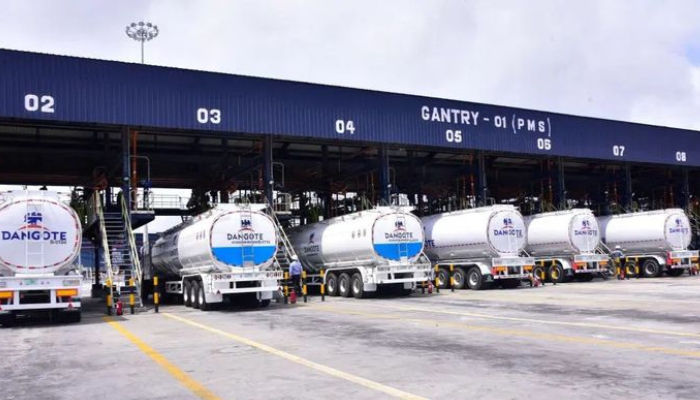
The Dangote Petroleum Refinery has announced its readiness to deliver 1.5 billion litres of petrol in December 2025, with plans to increase production to 1.7 billion litres per month by February 2026. This marks a significant step towards reducing Nigeria’s dependence on imported fuel and addressing the persistent scarcity that has long plagued consumers.
With long queues at petrol stations becoming a familiar sight in many parts of the country, this announcement comes as a relief for motorists and businesses alike. “Our goal is not just production, but ensuring a steady and reliable supply to meet national demand,” said a spokesperson for Dangote Refinery.
Read also: Nigerian firms’ profits rise 73% as Naira stability drives five-year high
Infrastructure and regulatory support
The refinery has invited the Nigerian Midstream and Downstream Petroleum Regulatory Authority (NMDPRA) to monitor production and inventory reports. This oversight is intended to ensure transparency and prevent discrepancies between claimed production and actual supply to the market. Analysts note that distribution infrastructure and regulatory cooperation will be critical to realizing the refinery’s full potential.
Experts argue that refining alone is insufficient if logistics and supply chains remain inefficient. “Nigeria needs an integrated approach — from refining to storage and distribution — to see tangible benefits for consumers,” said Dr. Emeka Nwosu, an energy policy analyst.
Read also: Big banks’ customer lending rises to N42trn as monetary easing begins to shape credit conditions
Implications for the economy
A consistent fuel supply could have broader economic benefits. Industries reliant on fuel, such as transportation, manufacturing, and agriculture, would experience reduced operational costs. Furthermore, by decreasing the need for imports, the country could save billions in foreign exchange.
For policymakers, the refinery’s pledge underscores the importance of supporting local production. Measures such as easing feedstock imports, improving pipeline security, and ensuring timely vessel clearance are necessary to complement production efforts.
Read also: CBN outlines next steps as Nigeria leaves FATF grey list
Looking ahead
If all plans proceed as expected, Dangote Refinery could reshape Nigeria’s fuel market by providing stability in pricing and availability. Consumers, businesses, and policymakers alike are watching closely, with hopes that this initiative marks a turning point for the country’s energy sector.