

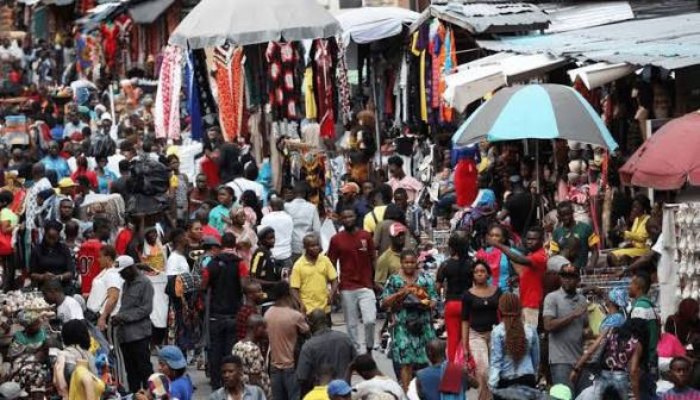
An estimated eight million micro, small and medium enterprises shut down across Nigeria between January 2023 and June 2024, representing approximately 20 per cent of the country’s estimated 40 million small businesses — a scale of collapse that the Alliance for Economic Research and Ethics has described as an existential threat to Nigeria’s economic foundation. The figures were disclosed by AERE Chairman Dele Oye in a policy brief titled “The Gap: Nigeria’s Industrial Policy 2025 vs. The Lived Reality of SMEs,” published this week.
The numbers behind the crisis
Oye cited research showing that as many as 95 per cent of Nigerian SMEs fail within their first five years of operation — a failure rate that already points to structural dysfunction within the small business ecosystem. The eight million closures documented between 2023 and 2024 occurred during a period of simultaneous economic shocks: inflation climbed to 33.4 per cent by July 2024, the naira depreciated sharply following unification of the foreign exchange market, and the removal of petrol subsidies in mid-2023 triggered a cascading increase in transportation, production, and logistics costs.
Some businesses surveyed by ASBON reported being forced to downsize their workforce by as much as 70 per cent before eventually shutting down entirely. The closures were concentrated in trade, food processing, manufacturing, and services — sectors where energy costs, raw material prices, and thin consumer purchasing power converge.
Eight million businesses is not a statistic. It is the livelihoods of millions of Nigerians, the jobs that sustained their families, the communities that depended on them, and the tax base that was never built because the businesses that would have paid into it no longer exist.
Read also: SMEDAN says Nigeria lacks investment-ready startups, launches trainer programme to fix the pipeline
The credit system at the centre of the failure
Oye described Nigeria’s credit ecosystem as having reached a structural breaking point, where monetary policy, fiscal behaviour, and institutional weaknesses now reinforce one another to systematically exclude the enterprises that drive jobs and output. MSMEs account for 96 per cent of businesses, 48 per cent of GDP, and 84 per cent of private sector employment — yet fewer than one in 20 has access to formal bank credit.
The gap between what development finance institutions hold in total assets — approximately N8 trillion — and what the sector requires — estimated at N130 trillion — is not a funding gap, Oye argued. It is a funding abyss.
With the CBN’s Monetary Policy Rate at 26.5 per cent and commercial lending rates exceeding 35 per cent at many institutions, the cost of borrowing has made formal credit inaccessible for most small businesses. The result is a sector that has been forced to choose between expensive informal funding, personal savings, or closure.
Read also: FCMB posts 99% profit growth in H1 2026 as SME, retail banking drive performance
What the policy says versus what is happening
Oye stopped short of dismissing the government’s industrial ambitions. He noted that Nigeria’s Industrial Policy 2025 is comprehensive, evidence-based, and aligned with frameworks including the AfCFTA. The policy promises single-digit loans, industrial clusters, technology incubation centres, skills development programmes, and fiscal incentives.
The problem, he said, is execution. The gap between what the policy says and what entrepreneurs experience daily has not narrowed. For millions of Nigerian business owners, the NIP2025 reads less like a practical roadmap and more like a distant promise.
Nigeria does not lack good policies. It lacks the institutional discipline, inter-agency coordination, and political will to implement them consistently enough that businesses can plan around them.