

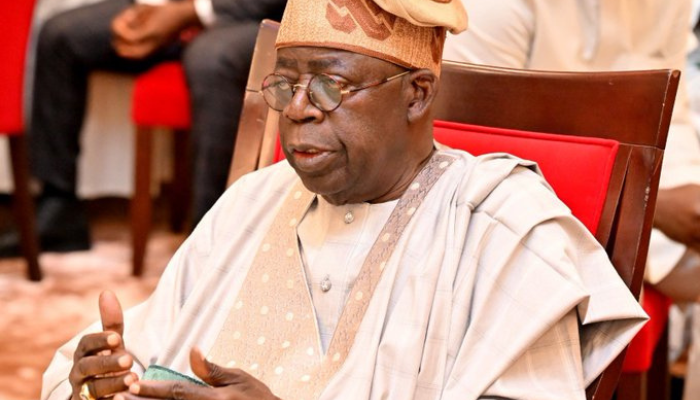
President Bola Tinubu has formally requested Senate approval for a $516.3 million external loan to finance the construction of key sections of the Sokoto-Badagry Super Highway, a 1,000-kilometre corridor designed to connect Nigeria’s north-west to its south-west. The request was read during a Senate plenary session on Thursday by Senate President Godswill Akpabio and has since been referred to the Senate Committee on Local and Foreign Debts, with a report-back period of one week.
Read also: How a fuel crisis pushed Nigeria’s airlines to the edge and what it means for business
A corridor with strategic ambitions
The Sokoto-Badagry Super Highway will stretch from Illela in Sokoto State, passing through Kebbi, Niger, Kwara, Oyo, and Ogun states before terminating in Badagry, Lagos. The loan will specifically fund Sections 1, 1A, and 1B of the route, covering approximately 120 kilometres in the first phase. Government officials say the completed highway could reduce travel time between Sokoto and Lagos from roughly 13 hours to approximately six, representing a significant reduction in logistics costs for businesses and commuters along the corridor. Some lawmakers noted that the project has remained on the drawing board for more than 50 years.
Read also: How to use what you have to get what you want
How the loan is structured
The financing will be arranged by Deutsche Bank as a syndicated facility, with a nine-year tenor that includes a grace period of up to three years. The interest rate is capped at the CME Secured Overnight Financing Rate (SOFR) plus 5.3 per cent per annum. A partial risk guarantee from the Islamic Corporation for the Insurance of Investment and Export Credit forms part of the financing structure. The Federal Government will also provide counterpart funding of ₦265.5 billion for land acquisition, compensation, and ancillary infrastructure, and the Federal Executive Council has already approved the terms. Not all voices are aligned. Former Vice President Atiku Abubakar criticised the request, warning against borrowing without transparent terms or a credible repayment framework, and urging the government to avoid further deepening the country’s debt burden.
Read also: How to start your business with internal funds
What it means for businesses along the corridor
For Nigerian SMEs, the potential impact of the superhighway extends well beyond reduced travel times. Improved connectivity between the north-west and south-west is expected to lower the cost of transporting goods, open access to ports and commercial markets, and strengthen food security by linking agricultural production zones to major distribution hubs. Logistics costs are a persistent burden for small businesses, particularly in manufacturing and agribusiness, where poor road infrastructure often erodes margins before goods reach consumers. If approved and executed on schedule, the Sokoto-Badagry corridor could significantly reshape the economics of trade for thousands of small enterprises operating across multiple states.