


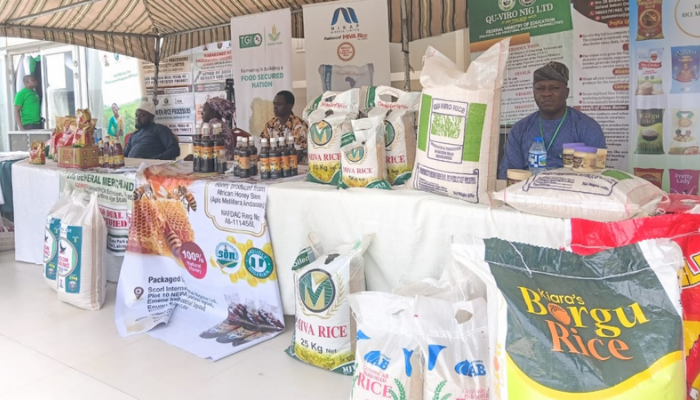
The Federal Government has awarded the Africa Quality Mark certification to 220 Made-in-Nigeria products produced by 131 companies, in a formal ceremony held in Abuja on Thursday, organised by the Standards Organisation of Nigeria.
The certification, developed under the auspices of the African Organisation for Standardisation, provides companies with a continental quality credential that reduces technical trade barriers and gives Nigerian-made products verified acceptance across African markets under the African Continental Free Trade Area framework.
Read also: 234Finance launches SME bootcamp with $2 m funding pool for African entrepreneurs
What the certification means in practice
The Africa Quality Mark is more than a label. It is a recognised signal to buyers, distributors, and trading partners across the African continent that a product meets harmonised quality, safety, and performance standards. For Nigerian manufacturers, it removes one of the most persistent friction points in cross-border commerce: the need to obtain multiple certifications for different national markets.
SON Director-General Ifeanyi Okeke was direct about the commercial implications. Companies receiving the certification today are no longer limited to the Nigerian market, he said. They now have access to the wider African market — a single statement that represents a significant expansion of addressable customers for every business on the list.
A quality mark that opens 54 African markets simultaneously is not a symbolic achievement for the companies that earn it. It is a commercial asset with a direct line to revenue.
Read also: WAWU Africa opens applications for N250,000 startup grants for Nigerian entrepreneurs
The government’s export agenda
Minister of Industry, Trade and Investment Jumoke Oduwole, represented at the ceremony by Permanent Secretary Chris Isokpunwu, described the certification as evidence that Nigerian products can meet continental standards and compete successfully across borders. She framed it within the government’s broader ambition to transition Nigeria from a consumption-driven economy into a leading production and export hub for Africa.
She also used the occasion to raise the bar for all manufacturers, stating that quality is no longer a competitive advantage but a baseline requirement. Consumers and trading partners now expect products to meet stringent standards for safety, reliability, and performance — and Nigerian businesses that fall short of that expectation will find themselves locked out of the markets that AfCFTA is opening.
Read also: How Nigerian, African lenders are rethinking SME credit by ditching traditional collateral
What this means for Nigerian SMEs
Many of the 131 certified companies are small and medium-sized manufacturers for whom the Africa Quality Mark represents a breakthrough in export readiness. The certification gives them access to institutional buyers, retail chains, and distribution partners across the continent that previously required relationships and documentation that most SMEs could not produce.
The AfCFTA creates the market. The Africa Quality Mark creates the credibility to enter it. For Nigerian SMEs with the capacity to produce and the ambition to export, these two things together represent the most practical combination of tools the continent has provided in years.
SON reaffirmed its commitment to supporting manufacturers through standards development, product certification, laboratory testing, and market surveillance, and confirmed it was intensifying awareness campaigns to encourage more Nigerian businesses to pursue AQM certification as part of their export readiness strategies.