

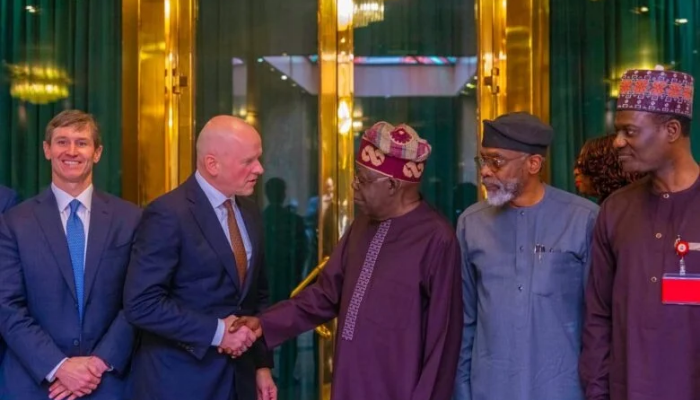
Mastercard Global Chief Executive Officer Michael Miebach led a delegation to President Bola Tinubu at the State House in Abuja on Tuesday, committing to a partnership to digitally empower 5 million Nigerian businesses as part of a broader ambition to unlock the economic potential of Nigeria’s 40 million small and medium-sized enterprises.
Miebach confirmed that Mastercard is currently bringing $2 billion in foreign exchange into the Nigerian economy annually while preventing approximately $200 million in fraudulent financial activity.
Read also: Tespire begins seed fundraising after Mastercard Foundation EdTech fellowship support
What Mastercard is building in Nigeria
Miebach described Nigeria as a market with significant momentum, noting that his company had met with CBN Governor Olayemi Cardoso and leading Nigerian bankers during the visit to assess where the ecosystem is heading. He spoke with particular conviction about the SME opportunity, describing it as one of the most consequential commercial and development levers in Nigeria’s economy.
Mastercard has already created a framework and platform to equip Nigerian small businesses with the digital skills they need to compete. Miebach noted that many small businesses want to develop a digital dimension to their operations but do not know how to proceed — a gap the programme is designed to close. The initiative connects directly to diaspora remittance flows and intra-African digital commerce, both areas where Mastercard sees Nigeria as a continental anchor.
40 million SMEs represent the spine of Nigeria’s economy. Connecting them to digital tools, payment infrastructure, and global commerce networks is not a corporate social responsibility exercise — it is one of the largest commercial opportunities on the continent.
Read also: Tinubu seeks finance reform as Nigeria’s $11.6bn debt hurts SMEs
What Tinubu said
President Tinubu welcomed the company’s commitment and described Nigeria’s youth population as its most valuable asset — a workforce that is ready to learn, tech-savvy, and capable of integrating into global markets. He pointed to the ongoing formalisation of Nigeria’s largely informal small-business sector as creating growing opportunities for digital transition, investment, employment, and growth.
Tinubu specifically directed Mastercard’s attention to the Bank of Industry’s MSME database as a resource for reaching and identifying the businesses most in need of digital enablement — a signal that the government sees the partnership as most valuable when it reaches businesses beyond the established commercial hubs.
Finance Minister Taiwo Oyedele added that economic reforms have created specific opportunities for Mastercard to improve credit and payment systems in Nigeria and across Africa, including the possibility of using the naira for currency swaps without requiring third-currency intermediaries. He also noted that five of the nine fintech unicorns in Africa are based in Nigeria — a data point that frames the country not just as a large market but as a leading fintech ecosystem.
Read also: AI is coming for Nigerian SMEs, but the tools are not built for them yet
Why it matters for Nigerian SMEs
For small business owners, the Mastercard commitment arrives at a moment when digital adoption is accelerating but the tools and knowledge to use it well remain uneven. Businesses that understand how to integrate digital payments, data analytics, and cross-border commerce capabilities into their operations gain access to customers, suppliers, and financing options that cash-based, manually run operations simply cannot reach.
The companies that will lead Nigeria’s next phase of economic growth are already forming. The ones that build digital capabilities now, while the infrastructure is maturing around them, will have the advantage when the market fully arrives.