

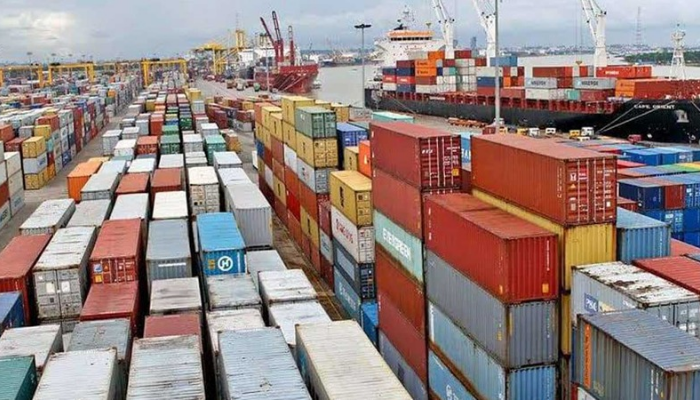
Approximately 1,000 export containers remain stranded at APM Terminals Apapa in Lagos, unable to sail after a combination of vessel shortages, surging export volumes, and persistent terminal congestion created a backlog that has now drawn intervention from the Nigerian Shippers’ Council. The development threatens to cost Nigerian exporters significant financial losses, with perishable commodities including hibiscus flowers among the affected cargoes.
Read also: Nigerian exporters warn shipping disruptions could affect trade operations
What happened
The Nigerian Shippers’ Council confirmed the scale of the problem following an engagement with Maersk Nigeria, one of the major shipping lines operating at Apapa. Maersk disclosed that approximately 1,800 export containers were awaiting shipment at the terminal at the peak of the congestion, of which 800 had been evacuated and roughly 1,000 remained trapped as of the NSC’s most recent update.
The Head of the NSC’s Complaints Unit, Juliana Saka, said the Council’s intervention was triggered by a formal petition from the National Association of Shippers over what were initially described as abandoned export containers. The affected cargoes are primarily destined for African countries and Far East markets, where vessel rescheduling has compounded delays and left shipments stranded well beyond the standard seven-day dwell time that shipping lines operate to when on schedule.
An export container sitting at a port for weeks is not just a logistics problem. It is a cash flow crisis for the business that packed it, a quality risk for the goods inside it, and a signal to international buyers that Nigerian export reliability cannot be counted on.
Read also: CanExport SMEs program 2026–27 opens doors for Canadian exporters
The structural causes
Maersk attributed the backlog to a sharp increase in Nigeria’s export volumes — a development that, paradoxically, reflects success in the government’s push to grow non-oil exports. Nigeria handled 102,803 TEUs of export-laden containers in Q1 2026 alone, equivalent to approximately 500 to 600 containers per day passing through the system. That volume growth has outpaced vessel capacity and terminal infrastructure, creating bottlenecks that the system was not designed to absorb.
The NSC warned Maersk that prolonged delays could expose the company to compensation claims if exporters’ goods deteriorate before reaching their destinations. Maersk has since committed to dispatching additional vessel capacity to address the backlog, with the NSC monitoring progress and maintaining pressure on the shipping line to fulfil that commitment.
Read also: FG kicks off WEIDE programme to empower 10,000 women exporters
What it means for Nigerian SME exporters
For small exporters — the hibiscus flower producers, agribusiness operators, and manufacturers whose goods are sitting in those 1,000 containers — the consequences are not abstract. Containers held at port accumulate demurrage and detention charges that are billed to the exporter. Perishable goods face quality deterioration that can make them unsaleable by the time they arrive. International buyers lose confidence in suppliers whose deliveries cannot be predicted.
Nigeria’s trade surplus grew 341 per cent in Q1 2026. That momentum matters — but it will not be sustained if the logistics infrastructure through which export goods move is unable to keep pace with the volumes the economy is generating.
Executive Secretary of the NSC, Dr Pius Akutah, said the Council had moved swiftly after the complaint was raised and reaffirmed its commitment to protecting the interests of Nigerian shippers and exporters. He noted that the intervention comes as Nigeria continues pushing for expanded non-oil exports, making logistics bottlenecks and port congestion among the most consequential operational challenges facing the sector.