

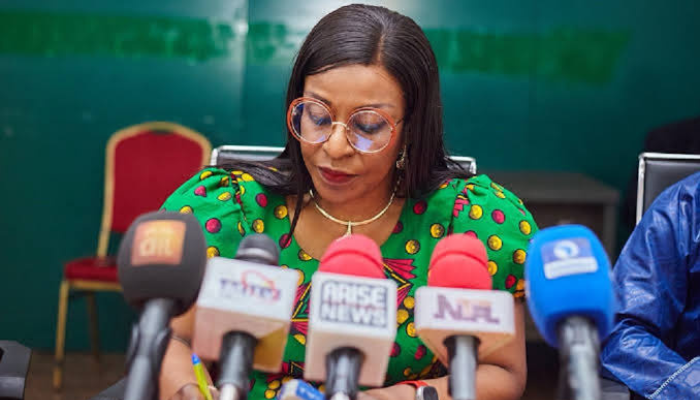
The Nigerian Export Promotion Council and the Bank of Industry have signed a Memorandum of Understanding formalising a structured partnership to expand access to finance, technical capacity building, and export opportunities for small and medium-sized enterprises across Nigeria. The agreement, signed in Abuja by NEPC Executive Director Nonye Ayeni and BOI Managing Director Dr Olasupo Olusi, responds directly to one of the most consistent findings in Nigerian SME development research: that financing access and export readiness must be developed simultaneously, not sequentially.
Read also: FG maps 500,000 MSMEs into national database as BOI disburses N600bn
What the partnership covers
The collaboration is designed around five interconnected priorities. The two institutions will work together to develop business clusters that allow SMEs in the same sector or region to access shared facilities and reduce individual infrastructure costs. They will improve product quality and certification standards across target sectors, helping businesses meet the requirements that international buyers impose before signing supply agreements. They will provide funding, equipment, and technical skills training to businesses that are viable but lack the resources to reach export readiness independently.
NEPC Executive Director Ayeni was explicit about the commercial logic: “Certification is very key in business.” A Nigerian food processor, textile maker, or agricultural producer whose goods cannot pass the quality and labelling standards of international markets is structurally excluded from the buyers willing to pay the highest prices for African-origin goods. The MoU positions the NEPC and BOI to address that exclusion systematically rather than through individual one-off interventions.
An export council without a financing arm has knowledge but no capital. A development finance institution without export market intelligence has capital but no direction. The partnership combines both, which is what Nigerian SMEs with export ambitions actually need.
Read also: AfDB approves $200m for BOI to expand long-term financing for Nigerian SMEs
Why the timing is significant
The MoU arrives as Nigeria’s non-oil export agenda is gaining commercial momentum. Nigeria’s cocoa exports to the United States surged dramatically in 2025. The AfCFTA zero-tariff framework is creating new market access opportunities across the continent. China’s zero-tariff policy extension to Nigerian goods has opened one of the world’s largest consumer markets to qualifying exporters. Each of these opportunities is, in principle, available to Nigerian SMEs. In practice, they are accessible only to businesses that can meet quality standards, secure the right certifications, and access the financing to scale production for export volumes.
The NEPC and BOI are the two federal institutions best positioned to close the gap between those opportunities and the businesses that should be capturing them. The MoU creates the institutional framework within which that gap can be systematically addressed.
Read also: NGX, BOI take SME capital market financing drive to Kano
The outlook for participating businesses
SMEs that engage with the NEPC-BOI partnership can expect access to a more integrated support pathway than has previously been available through either institution independently. The combination of BOI financing with NEPC market intelligence, buyer connections, and certification support creates the kind of comprehensive package that has helped export clusters succeed in comparable developing economies.
Nigeria’s export potential is not constrained by the quality of what its businesses can produce. It is constrained by the gap between production capacity and the market access infrastructure needed to convert that capacity into international revenue. The NEPC and BOI MoU is the most concrete institutional step toward closing that gap since the two agencies were established.