


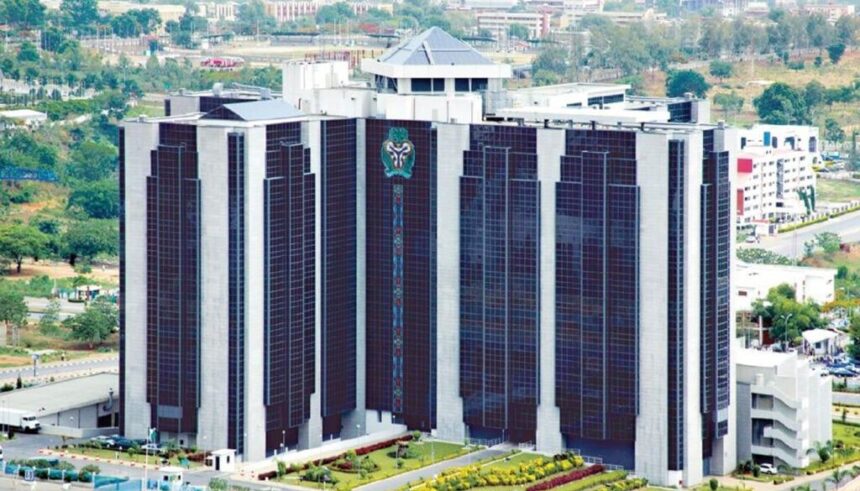
Nigeria’s banking sector has entered a new phase of financial capacity following the completion of its sweeping recapitalisation programme, with the Central Bank of Nigeria confirming that the 33 banks that met the new capital requirements are now better positioned to expand lending to small and medium-sized enterprises. However, analysts and business groups warn that stronger balance sheets have not yet translated into meaningfully cheaper or more accessible credit for most small businesses.
Read also: 40% of Nigerian businesses are women-owned, yet credit remains elusive
The recapitalisation and its intended impact
The CBN’s two-year recapitalisation programme, which ended on 31 March 2026, injected approximately ₦4.65 trillion in fresh capital into Nigeria’s banking system. The apex bank has stated that the strengthened institutions are now positioned to finance SMEs, agriculture, export-oriented businesses, and critical infrastructure more aggressively than before. Leading lenders including United Bank for Africa have publicly committed to channelling the fresh capital toward expanding SME financing and deepening financial inclusion.
The macroeconomic backdrop has also improved. Inflation eased to 15.06 per cent in February 2026 after declining for 11 consecutive months, exchange rate stability has improved, and external reserves have risen above $50 billion. These conditions, the CBN argues, create a more conducive environment for productive lending.
Better-capitalised banks in a more stable macroeconomic environment should, in theory, translate into more credit flowing to small businesses. The question is whether that theory holds in practice.
Read also: CBN fixes May 19 for rate decision meeting as businesses push for further cuts
Why small businesses are not yet feeling it
Despite the improved conditions, the Centre for the Promotion of Private Enterprise has cautioned that the benefits of recapitalisation have yet to reach the real economy in a meaningful way. Commercial lending rates for SMEs remain above 30 per cent annually, and over 51 per cent of Nigerian small businesses have opted out of formal borrowing entirely, according to recent survey data.
The structural barriers are well-documented. Many SMEs lack the formal documentation, collateral, or financial records that banks use to assess creditworthiness. Even with stronger capital bases, banks remain cautious about SME lending due to perceived risk, limited credit data, and high recovery costs when loans go bad.
Muda Yusuf, Chief Executive of CPPE, has consistently called for a dedicated concessionary financing window for small businesses offering lower rates and longer repayment periods, arguing that the current commercial lending framework is structurally unsuited to the needs of most Nigerian SMEs.
Read also: BOI, EIB seal €135m deal to channel EU-backed financing Nigerian agribusiness
What the coming months will show
The CBN’s decision on interest rates at its May 2026 MPC meeting will offer an important signal. A further cut from the current 26.5 per cent would add to the gradual easing of borrowing conditions and increase the pressure on banks to deploy capital into productive assets rather than government securities.
For Nigerian SMEs, the recapitalisation has created the conditions under which lending could improve. Whether banks choose to act on those conditions, and how quickly, will determine whether the sector’s funding gap begins to narrow in any meaningful way this year.