
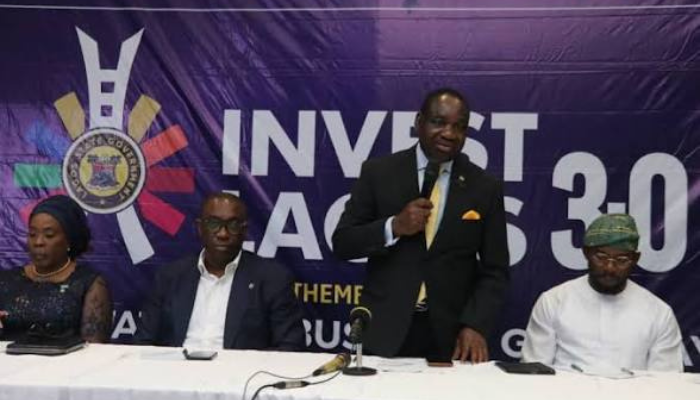
The Lagos State Government has announced the third edition of its flagship investment forum, Invest in Lagos 3.0, set to hold on 8 and 9 June 2026 at Eko Hotels and Suites, Victoria Island. The summit, organised in partnership with the Commonwealth Enterprise and Investment Council, is targeting over N4 trillion in local and foreign direct investment, with SME development among the priority sectors on the agenda.
Read also: Rising costs push Nigerian SMEs deeper into survival mode
The scale of what is being planned
Between 500 and 600 high-level delegates are expected to attend, drawn from the 56 Commonwealth nations and including sovereign wealth funds, development finance institutions, multilateral agencies, structured finance specialists, and senior government officials. More than 29 international speakers have already confirmed participation, with confirmed attendees including Lagos State Governor Babajide Sanwo-Olu, Commonwealth Secretary-General Shirley Botchwey, Minister of Industry, Trade and Investment Jumoke Oduwole, and executives from Microsoft, First Bank, Sterling Bank, and the Nigeria Sovereign Investment Authority.
Commissioner for Commerce, Cooperatives, Trade and Investment Folashade Bada Ambrose-Medebem described Lagos as sitting at the centre of the African economic story, pointing to its population of over 23 million, one of the continent’s largest city economies, a growing industrial base, and one of Africa’s busiest seaports as factors that make it a uniquely positioned destination for capital.
With a GDP that ranks among the largest of any city on the continent, Lagos is not simply making a pitch for investment — it is presenting a commercial argument that is increasingly difficult to dismiss.
Read also: Polaris Bank, NACCIMA inaugurate Export Express Support Centre to scale non-oil trade
What the summit means for SMEs
SME development has been explicitly identified as one of the forum’s priority focus areas alongside infrastructure, the digital economy, agriculture, energy transition, logistics, and financial services. For small businesses, the practical value lies in what typically follows events of this scale: new partnerships, structured funding conversations, and the kind of policy commitments that improve the operating environment over the medium term.
The summit will feature investment matchmaking sessions, Business-to-Business and Business-to-Government meetings, and sector-focused discussions designed to translate conversations into deployable investment outcomes. Deputy Chief of Staff Sam Egube was direct about the expectation: this summit will move conversations into measurable outcomes, he said.
Read also: Capital and technology to define the next phase of SME growth, says Regent MFB boss
The bigger picture
The forum aligns with the Lagos State Development Plan 2052 and the administration’s T.H.E.M.E.S+ agenda, both of which frame investment attraction as central to long-term economic growth. For Nigerian SMEs, particularly those in Lagos, a summit that brings global capital providers into structured conversation with local businesses and government represents a genuine opportunity to access networks and funding channels that are otherwise difficult to reach.
Whether the N4 trillion target is achieved will matter less than whether the relationships and commitments formed at the summit translate into real investment activity on the ground over the following 12 to 24 months.