

The Nigerian Economic Summit Group has projected that Nigeria’s external reserves will rise to approximately $53 billion by the end of 2026, even as it urged the Federal Government to prioritise diverse sources of patient capital over continued reliance on public resources.
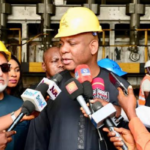
The projection was presented by the NESG’s Interim Director of Research and Development, Dr Joseph Ogebe, at the Nigerian Industrialisation and Competitiveness Forum held in Lagos on Wednesday — a platform designed to examine how Nigeria can translate its economic momentum into sustained industrial and SME growth.
Read also: Global supply chain shocks make Nigeria’s non-oil export push more urgent — NESG
The macroeconomic baseline
Ogebe’s H2 Economic Outlook projected GDP growth of 4.5 per cent for the second half of 2026, pushing full-year growth to approximately 4.2 per cent. The drivers identified were improved performance across oil, manufacturing, agricultural, and services sectors, with increased domestic refining activity expected to strengthen industrial output and reduce dependence on imported refined products.
The naira is forecast to remain broadly stable through the second half of the year, with the external sector expected to stay resilient as oil revenues, improved foreign portfolio investment conditions, and continued monetary policy discipline support the balance of payments position.
$53 billion in external reserves by December 2026 would be the highest figure Nigeria has recorded in over a decade. It is a macroeconomic achievement that changes how international lenders, investors, and trading partners assess the country’s creditworthiness — and that matters for the cost and availability of financing for businesses that depend on imported inputs or cross-border trade.
Read also: FG signs $1.3bn deal to revive Delta Steel, manufacturing supply chain opportunity opens
What the NESG said about capital
NESG Chairman Olaniyi Yusuf used the forum to deliver a pointed message about how the next phase of Nigeria’s growth must be financed. The government cannot do it alone, he said — the scale of investment needed to build the industrial base, infrastructure, and SME ecosystem that a $1 trillion economy requires demands private capital, development finance, and patient institutional investment that public resources cannot provide at the necessary volume.
He also stressed that persistent global supply chain disruptions — linked to geopolitical tensions across multiple flashpoints in 2026 — had reinforced the urgency of reducing Nigeria’s dependence on hydrocarbon revenues by strengthening the non-oil export base. Businesses that depend on global supply chains have experienced the fragility of that dependence across multiple disruption events this year.
Read also: US-Iran truce collapses again as Strait of Hormuz dispute returns fuel price pressure
Why this matters for businesses
For Nigerian SMEs and investors, the H2 outlook provides a macroeconomic backdrop that is more supportive than the first half of 2026 suggested. Inflation is easing — headline CPI fell to 15.43 per cent in July — the naira is relatively stable, and reserves are growing. These are the conditions under which credit becomes more affordable, import costs become more predictable, and business planning becomes more viable.
The gap between a healthy macroeconomic dashboard and a healthy SME operating environment is not automatically closed by better numbers. It closes when the better numbers translate into cheaper credit, more reliable infrastructure, and a business environment where the cost of operating falls in line with the cost of the inputs.