

Nigerian agro-development company JR Farms Group has signed a $60 million public-private partnership concession agreement with the Government of Liberia to revitalise the West African nation’s coffee sector, in a landmark cross-border deal that signals a growing appetite among Nigerian agribusinesses to build regional value chains rather than operate solely within the domestic market.
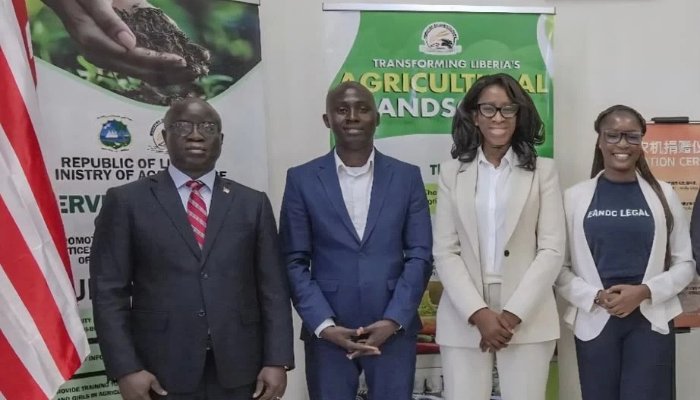
The 20-year agreement was signed on Monday, 8 June 2026, at the Ministry of Agriculture in Monrovia by Liberia’s Agriculture Minister J. Alexander Nuetah and JR Farms Group Founder and CEO Olawale Rotimi Oyeyemi.
Read also: BOI, EIB seal €135m deal to channel EU-backed financing Nigerian agribusiness
What the deal involves
Under the concession arrangement, JR Farms Group will oversee a comprehensive revival of Liberia’s coffee industry, primarily operating in the key coffee-producing counties of Nimba, Lofa, and Bong. The initiative plans to develop over 250,000 hectares of coffee plantations and support the planting of approximately 200 million coffee trees over the agreement’s two-decade span.
The project is expected to benefit more than 200,000 smallholder farmers and generate an estimated 300,000 direct and indirect jobs across Liberia’s coffee value chain — figures that position the deal as one of the most significant agricultural investment commitments in West Africa in recent years. Nigerian commercial law firm EandC Legal served as lead transaction counsel, advising on the legal, regulatory, and commercial structures underpinning the cross-border partnership.
A 20-year concession with a $60 million commitment is not a pilot programme. It is a structural bet on the agricultural potential of West Africa, placed by a Nigerian company that has decided the continent’s opportunity is worth building for the long term.
Read also: Agric SMEs get boost through new national partnership
Why Liberia and why coffee
Liberia holds a distinctive position in the global coffee industry as the origin of the Liberica coffee variety, a bean with unique flavour characteristics that commands growing interest in specialty markets. Despite this heritage, the country’s coffee sector has been significantly underdeveloped for decades, with production capacity far below what the agroecological conditions could support.
JR Farms Group CEO Oyeyemi described the opportunity in those terms, noting that Liberia’s recognition as the birthplace of the Liberica variety, combined with fertile soils and favourable growing conditions, creates a platform for African agribusiness to scale in ways that extend well beyond the national boundaries of either Nigeria or Liberia. The deal also aligns with Liberia’s National Agriculture Development Plan, which targets the establishment of 15,000 hectares of new coffee farms over the next five years.
Read also: World Bank approves $500m to boost Nigeria’s agricultural sector, support farmers
What it means for Nigerian agribusiness
The deal represents an important signal about the direction of travel for Nigeria’s most ambitious agribusiness operators. Rather than limiting growth to the domestic market, companies like JR Farms are increasingly treating the African continent as their operating geography — and the AfCFTA framework has made the legal and commercial structures for such cross-border investments considerably more navigable.
EandC Legal’s Founder and Lead Partner Omoruyi Edoigiawerie noted that the deal underscores the growing influence of Nigerian firms in shaping large-scale agricultural investments beyond the country’s borders, and highlighted it as an example of the kind of strategic public-private collaboration that is beginning to unlock Africa’s broader agricultural potential.
Nigerian agribusinesses that are building regional value chains today are positioning themselves ahead of a continental trade integration curve that is still in its early stages. JR Farms’ Liberia deal is one of the clearer illustrations of what that ambition looks like when it moves from aspiration to signed agreement.