

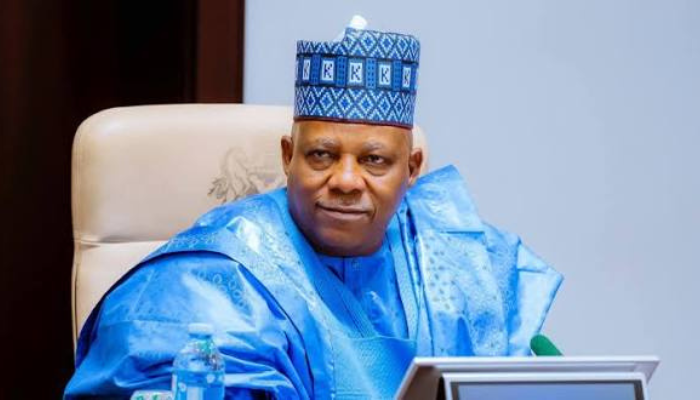
John Owan-Enoh, the Minister of State for Industry, says micro, small and medium-sized enterprises account for 96 per cent of businesses in Nigeria, contribute about 48 per cent of gross domestic product and provide 87 per cent of employment.
He spoke on Sunday night in Calabar at a town hall with business operators organised by the Directorate of Manufacturing and MSME of the All Progressives Congress Presidential Campaign Council. He described it as the directorate’s first public outing ahead of the party’s presidential campaign rally in Cross River State.
Read also: DBN disburses N1.4 tn to Nigerian MSMEs, launches women’s initiative businesses
What the minister said about the sector
Owan-Enoh called MSMEs the backbone of the economy and argued that, with such a large share of firms, jobs and output, they are effectively the economy itself. He told the operators present that they were the economy of Cross River and of Nigeria, and urged manufacturers and traders to take pride in what they contribute. Strengthening the sector, he said, is critical to national development.
Support in Cross River
He commended Governor Bassey Otu for reviving the Micro-Enterprise Development Agency, which he called an important step for small businesses. The state is also working with federal bodies including the Small and Medium Enterprises Development Agency of Nigeria, the Bank of Industry and the Nigerian Export-Import Bank to strengthen business support.
On federal projects in the state, he listed an automotive training centre at the University of Cross River, a compressed natural gas conversion workshop and a 65-kilowatt solar-powered electric vehicle charging station at the University of Calabar. He added that a memorandum of understanding had been reached with a South Korean team on electric vehicle manufacturing in the state.
Cocoa and local processing
Cross River is Nigeria’s leading cocoa-producing state, and the minister said it would benefit from the new Nigerian Industrial Policy, which stresses value addition. The opportunity, he said, is to process raw materials locally and create more businesses and jobs, instead of exporting them unprocessed.
For small businesses, local processing could create demand for equipment, packaging, transport and trading services. It also depends on reliable power and affordable finance, two constraints small manufacturers raise often.
Read also: Payxy, SMEDAN launch Oloja to pull Nigeria’s MSMEs out of improvised digital commerce
How to read the figures
The shares quoted in Calabar deserve some care. Last week, at the 32nd Nigerian Economic Summit in Abuja, the same minister said the national estimate of 39.5 million MSMEs rests on data from 2020 and that a fresh count is needed. Officials also quote different shares. The Bank of Industry’s chief executive said last year that MSMEs make up over 80 per cent of Nigerian businesses and contribute nearly half of GDP.
Headline shares help make the case for support, but they are no substitute for current data. Until a new count is done, owners and lenders are working from estimates.
What it means for owners
Reports of the town hall give no figures for new funding, eligibility rules or timelines. Owners looking for support will need specifics from SMEDAN, the Bank of Industry or the state agency. The programmes named are mostly training and infrastructure. These can lift skills and energy access over time, but they do not pay for stock or working capital.
Because the event was part of campaign activity, commitments will be easier to assess once budget lines, timelines and eligibility rules are published. For small businesses in Cross River, that detail will matter more than the headline numbers.