

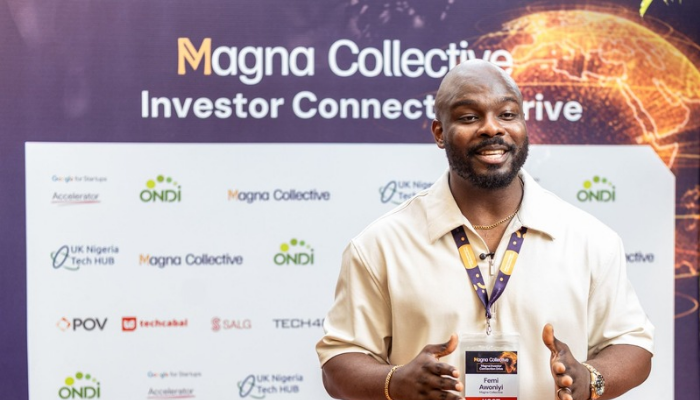
Magna Collective, an innovation intelligence firm, has matched 26 Nigerian startups with 16 venture investors in 61 pre-arranged one-to-one meetings, in an effort to widen access to capital for early-stage founders. The Investor Connection Drive took place in Lagos on 27 October. Google for Startups, the UK-Nigeria Tech Hub of the UK Government’s Foreign, Commonwealth and Development Office, and the Office for Nigerian Digital Innovation sponsored it.
Read also: Mainstack CEO urges Nigerian startups, investors to judge funding by revenue not capital raised
How the matching worked
Magna arranged every meeting in advance, pairing each investor’s stage, cheque size and sector focus with startups that fitted. The sessions ran in a speed-dating format built for short, focused conversations. The startups work in fintech, health, artificial intelligence, logistics, energy, agriculture and education, and more than two-thirds have women in leadership roles.
The firm draws on data from more than 24,000 Nigerian companies and its own artificial intelligence tools to connect founders, investors and partners where there is a real fit.
The concentration problem
The drive arrives as Nigerian startup funding recovers but remains narrow. Nigerian startups raised $635 million in the first nine months of 2026, more than double the same period of 2025 and the highest total in Africa, according to Africa: The Big Deal. Only 77 Nigerian startups raised at least $100,000 in that period, and a single $250 million transaction by mobility finance company Moove accounted for almost 40 per cent of the total.
Read also: How Nigerian startups are surviving high inflation in 2026
A record headline figure that rests on one deal says little about whether an ordinary early-stage founder in Lagos, Kano or Port Harcourt can raise a first cheque. Matching by stage and cheque size targets exactly that gap.
Why the format matters
Victoria Fabunmi, National Coordinator of the Office for Nigerian Digital Innovation, said the programme lets founders speak to several investors at once without the pressure that usually comes with a conventional pitch, so they can be themselves.
For young businesses, wasted introductions carry a real cost. A founder who meets ten investors whose mandates do not fit has spent weeks without progress. Pre-screened meetings cut that waste.
Read also: 8 million Nigerian businesses shut down in 18 months as SME crisis deepens
What to watch
The test is conversion. Sixty-one meetings are a start, and the number of term sheets and closed rounds that follow will show whether structured matching can move capital beyond the handful of large deals that dominate the totals. Reports on the drive do not yet say how many meetings will turn into investment.
Introductions are the cheap part of fundraising. Closing is where most founders stall, and it is where the next measure of this programme will sit.