


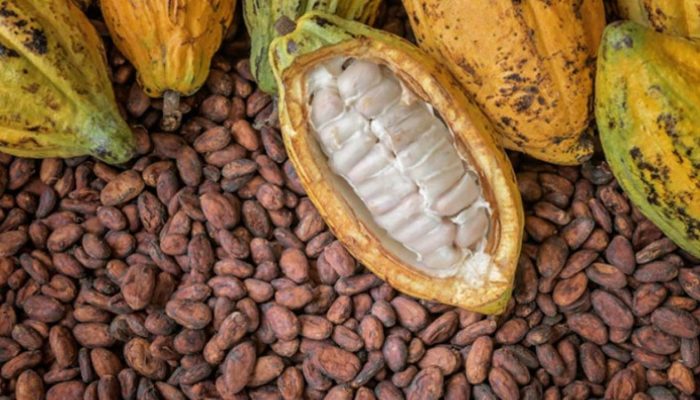
Nigeria’s cocoa bean exports to the United States rose sharply from $21.7 million in 2024 to $142 million in 2025, a 554 per cent increase that positions Nigeria as a significantly more important cocoa supplier to the American market and creates meaningful commercial opportunities for the agribusiness SMEs that supply, process, and distribute the country’s cocoa along its value chain. The figures, disclosed in a Premium Times report citing trade data, reflect a structural shift in how American buyers are approaching cocoa sourcing in the context of persistent supply disruptions from Ivory Coast and Ghana, the world’s two largest producers.
Read also: China’s zero-tariff policy opens export window for Nigeria
What drove the surge
Nigeria’s dramatic export increase to the US in 2025 occurred against a backdrop of severe supply pressure in global cocoa markets. Dry weather conditions and the spread of cocoa swollen shoot virus devastated harvests across West Africa’s established cocoa belt, pushing global cocoa prices to record highs that exceeded $12,000 per tonne in early 2024 before easing. American buyers seeking to secure supply diversified their sourcing relationships, with Nigerian cocoa becoming a more commercially attractive option as supply from the traditional producing countries tightened.
The Africa Quality Mark, awarded to Nigerian commodities companies as part of the government’s export readiness programme, and the continued work of the Nigerian Export Promotion Council in connecting domestic producers with international buyers have gradually improved the market’s perception of Nigerian cocoa quality, making the jump in American demand more sustainable than a purely price-driven shift would be.
A commodity export rising from $21.7 million to $142 million in a single year is not a coincidence or a one-off event. It is the commercial expression of buyers deciding to treat Nigeria as a serious, bankable supplier rather than a residual option. Maintaining that status depends entirely on supply consistency, quality reliability, and the institutional infrastructure to support long-term commercial relationships.
Read also: Nigeria, UAE sign trade agreement to expand exports and investment flows
What it means for Nigerian agribusiness SMEs
The cocoa value chain in Nigeria encompasses hundreds of thousands of smallholder farmers, dozens of aggregators, and a growing number of primary processors and exporters whose commercial outcomes are shaped by the volumes moving through the market. A 554 per cent surge in US-bound exports creates demand pressure across every segment of that chain.
For cocoa farmers in Ondo, Osun, Cross River, and Edo states, stronger export demand translates into better farmgate prices. For aggregators who buy from farmers and sell to exporters, larger volumes create working capital requirements that development finance institutions and commercial lenders can serve. For processing companies that convert cocoa beans into semi-finished products before export, the volume surge creates both an investment case for capacity expansion and a competitive imperative to upgrade quality to retain American buyers who now have real alternatives if Nigerian supply standards slip.
The NEPC-BOI MoU signed this week creates an institutional pathway for these businesses to access the financing and quality support they need to sustain and expand on the commercial momentum the 2025 export surge represents.
Read also: Banks urged to back SMEs, exports in Tinubu’s economic framework
The sustainability question
The $142 million export figure is significant, but its sustainability depends on factors that Nigerian policy and business can control and factors they cannot. On the controllable side, farm rehabilitation, access to improved varieties, agronomy support, and consistent quality inspection protocols all determine whether Nigerian cocoa remains competitive in the American market once Ivorian and Ghanaian supply recovers.
The window created by West Africa’s 2024 supply crisis gave Nigeria an opportunity to demonstrate it is a reliable cocoa supplier. Turning that demonstration into a durable market position requires investment in the smallholder farming base and the quality infrastructure that makes buyers stay after the supply disruption that first brought them ends.