

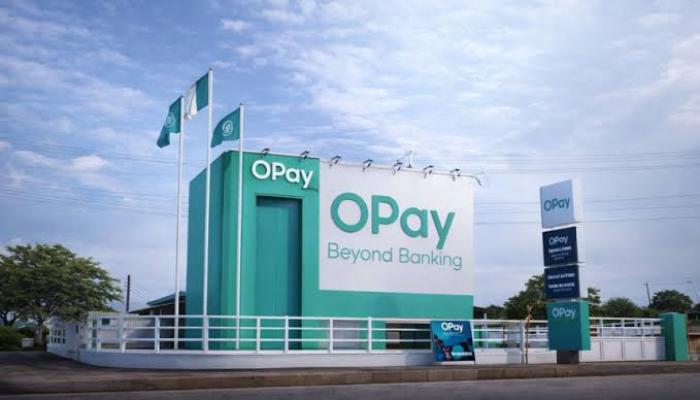
Nigerian fintech OPay has filed a registration statement with the United States Securities and Exchange Commission, formally applying to list its American depositary shares on the New York Stock Exchange under the ticker symbol OPAY. The filing, dated October 9, 2026, sets in motion what could become one of the most consequential fintech listings in African corporate history, with South Africa’s Standard Bank Group simultaneously agreeing to invest up to $200 million through a linked private placement at a maximum stake of 4.99 per cent.
Read also: OPay deepens SME support as digital payments reshape Nigeria’s small business economy
The business behind the listing
OPay’s F-1 filing reveals the scale of a company that has grown far beyond its origins as a mobile payments platform. The company processed 90.1 billion transactions in the twelve months to June 2026, with a gross transaction value of $558 billion. Revenue more than doubled in the first half of 2026, recording 136 per cent growth year-on-year alongside a sharp improvement in net income. Nigerian operations accounted for 89.5 per cent of first-half revenue, reflecting the company’s deep penetration of Africa’s largest consumer market, but also the concentration risk that international investors will assess carefully.
The company’s financial profile has transformed in a short period. OPay’s agent network supports over 50 million monthly active users, with operations spanning payments, credit, savings, and merchant services. Its POS terminal network is among the most widely distributed in Nigeria, reaching communities where traditional banking has historically had limited presence.
A fintech that processes $558 billion in annual transaction value is not a startup. It is a financial infrastructure company at scale, and the NYSE listing is an attempt to have that recognised by global institutional capital.
Read also: EFCC urges Opay to strengthen controls against fraud and money laundering
What Standard Bank brings to the deal
The Standard Bank investment is more than equity. The two companies have agreed to explore commercial collaboration across merchant payments, foreign exchange, and wealth products, with Standard Bank’s Africa Chief Executive Lungisa Fuzile joining OPay’s board as a non-executive director. Standard Bank already operates in Nigeria through Stanbic IBTC Holdings, giving it an established regulatory and commercial footprint alongside which OPay’s digital distribution could add significant value.
The investment is capped at a maximum 4.99 per cent stake to avoid triggering specific regulatory thresholds, with Standard Bank restricted from selling shares for twelve months after the prospectus date. The precise investment amount will be determined by OPay’s final IPO price and Standard Bank’s applicable capital limits, with the company’s filing disclosing a ceiling of $200 million and an indicative figure of approximately $185 million.
Citigroup, Deutsche Bank, Standard Bank, and China International Capital Corporation are joint bookrunners for the transaction.
Read also: Standard Chartered holds SME Day session to push Nigerian businesses toward export markets
The Nigerian Exchange secondary listing
OPay’s board and shareholders have approved pursuing a secondary listing on the Nigerian Exchange after the proposed NYSE flotation, subject to regulatory approvals and market conditions. The timing of that listing has not been confirmed, but its announcement alongside the US filing signals a deliberate commitment to ensuring that Nigerian retail investors, many of whom are already OPay customers, have the opportunity to participate in the company’s equity story.
If OPay’s secondary NGX listing follows a successful Wall Street debut, it would place one of Nigeria’s most widely used financial platforms on the same exchange as the Dangote Refinery, FirstBank, and Zenith Bank, materially deepening the retail equity ownership culture the market has been trying to build.
For Nigerian SMEs that use OPay’s POS terminals, payment links, and merchant credit products daily, the listing represents something beyond capital market news. It is the formal recognition, on one of the world’s most scrutinised financial stages, that the financial infrastructure on which millions of Nigerian businesses depend has reached a scale and quality worthy of global institutional investment.