

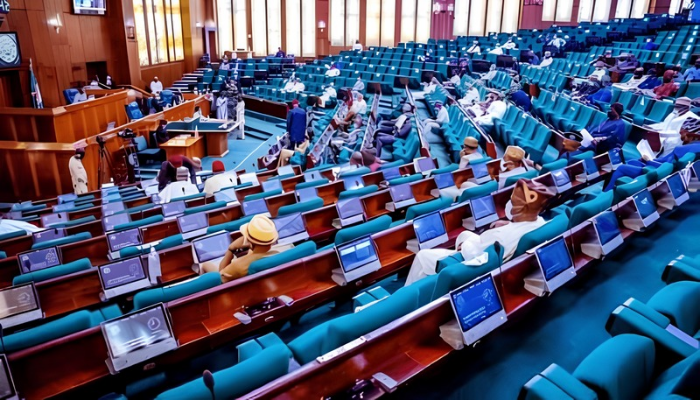
The House of Representatives has proposed a minimum monthly intervention fund of N1 billion in every state to support micro, small and medium enterprises. It blamed bureaucratic bottlenecks, high lending rates and weak institutional support for slowing the sector’s growth. The proposal came on Monday, 23 November, at a stakeholders’ roundtable in Abuja organised by the House Committee on Small and Medium Enterprises, themed “Unlocking the Potential of Nigerian MSMEs through Legislative Reform, Access to Finance, Market Linkages and Strategic Partnership”.
Read also: DBN launches $275m DELTA climate finance programme for Nigerian MSMEs
What the House said
Speaker Tajudeen Abbas, represented by Majority Leader Julius Ihonvbere, said Nigeria’s ambition of a $1 trillion economy by 2030 is unrealistic without strong MSMEs. He expressed dismay that despite several government intervention agencies and large sums injected into the sector, many small businesses still struggle with limited access to affordable finance, cumbersome regulatory procedures and inadequate institutional support. He said the survival of many small businesses depends more on the resilience of their owners than on meaningful government help.
The House also faulted state and local governments. It said they have failed to provide adequate financial and policy support to small businesses despite higher federal allocations, and that states have the capacity to set up dedicated funds for entrepreneurs.
On simple arithmetic, N1 billion a month in each of the 36 states would come to N432 billion a year. That is more than twice the N200 billion federal support package approved in October, which shows how large a role the House expects states to play.
Read also: BOI secures $50m IFC loan to widen long-term financing for Nigerian MSMEs
Finance, red tape and partnerships
Committee Chairman Pascal Agbodike said the roundtable was meant to move beyond describing the problems of MSMEs towards practical legislative and institutional solutions. He asked stakeholders to give honest assessments of existing policies and programmes. The meeting drew government agencies, financial institutions, development finance institutions and private-sector groups.
Zahrah Mustapha Audu, Director-General of the Presidential Enabling Business Environment Council, said access to affordable financing, fewer regulatory bottlenecks and stronger partnerships with state governments are critical to unlocking the sector’s potential.
Read also: DBN moves beyond lending to build stronger MSMEs
Why it matters for small business owners
The roundtable follows an October House motion that called for an emergency national summit on affordable SME finance, citing lending rates above 30 per cent that compare poorly with Kenya, South Africa and the CEMAC region. The state fund proposal goes further, because it shifts part of the financing responsibility to governors rather than leaving it with federal agencies and banks.
For a trader or manufacturer in a state with no active MSME fund, a monthly N1 billion window could change access to working capital. The outcome would depend on how each state designs eligibility, repayment terms and oversight, details that the reports of the roundtable do not settle.
A proposal is not a law. The test is whether the committee turns the roundtable into a bill or resolution that states are expected to follow, and whether governors respond.