

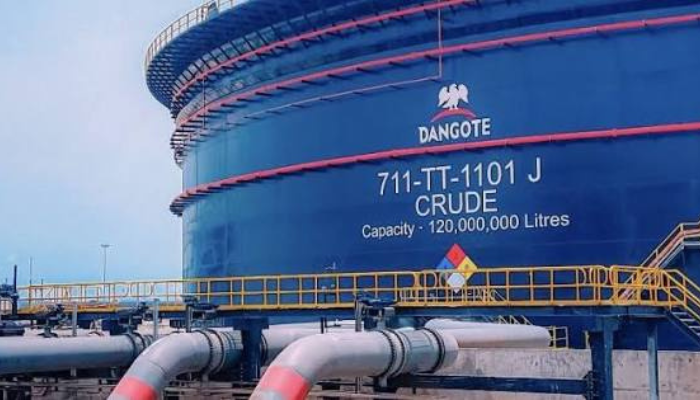
Dangote Petroleum Refinery and Petrochemicals has raised $2.5 billion through a private placement of shares, attracting approximately $4 billion in investor demand — nearly double the amount ultimately raised.
The oversubscription, confirmed on Friday 17 July 2026 by the refinery’s Group Executive Director Devakumar Edwin, signals the scale of institutional appetite for equity in what is expected to become Africa’s largest initial public offering when the refinery lists on the Nigerian Exchange, tentatively targeted for September 2026.
Read also: Dangote Refinery holds firm on prices as crude oil crash widens gap with imported fuel
How the placement was structured
The transaction was executed in two stages: an initial $2 billion share sale followed by an additional $500 million tranche, with shares priced at $0.35 each. Investors were required to subscribe for a minimum of one million shares, representing an entry threshold of $350,000, with additional purchases available only in multiples of 500,000 shares. All shares acquired in the placement are subject to a 365-day lock-up period before they can be sold.
The placement sold approximately six per cent of the refinery’s equity to a group of mainly institutional and regional investors, with Dangote’s team placing specific emphasis on African participation in both the private and eventual public tranches. The refinery has been separately valued at $39.1 billion based on the pricing of the private placement — a figure that makes the September IPO one of the most consequential capital market events in Nigerian history.
An asset valued at $39.1 billion listing on the Nigerian Exchange would transform the market’s profile overnight. For context, the entire NGX market capitalisation at the start of 2026 was approximately $60 billion — a single listing at this scale changes the composition and gravity of the exchange fundamentally.
Read also: Dangote refinery emerges as world’s largest jet fuel exporter, plans $10bn expansion
What proceeds will fund
Dangote has outlined ambitious plans for the capital raised. The refinery currently processes approximately 700,000 barrels of crude oil per day, having already exceeded its nameplate capacity of 650,000 barrels. The proceeds from both the private placement and the planned IPO are earmarked to fund an expansion of processing capacity to 1.4 million barrels per day by 2028 — a doubling of current throughput that would place the facility firmly in the top tier of global refining capacity.
The refinery has also announced plans to replicate its model in Kenya as part of Aliko Dangote’s broader continental industrial investment strategy. Expansion plans also cover the adjacent petrochemicals complex, which produces polypropylene and other industrial inputs that Nigerian manufacturers and SMEs currently import at significant foreign exchange cost.
Read also: Concerns grow over Dangote refinery influence on Nigeria’s petrol supply market
What it means for Nigerian businesses
The refinery’s expansion trajectory has direct implications for Nigerian SMEs through two channels. First, increased domestic refining capacity reduces the country’s dependence on imported refined petroleum products, which has historically amplified global price shocks at the Nigerian pump. A refinery processing 1.4 million barrels per day effectively insulates Nigeria from the supply volatility that drove petrol prices above N1,300 per litre during the Middle East conflict earlier in 2026.
Second, the IPO itself creates a direct investment opportunity for Nigerian retail investors to participate in the equity of one of the country’s most strategically important industrial assets — a form of economic inclusion that extends beyond the institutional investors who participated in the private placement.
Nigeria has spent decades importing fuel it could produce. The Dangote Refinery’s expansion to 1.4 million barrels per day changes that equation structurally — and the capital to fund that expansion is now substantially secured.