

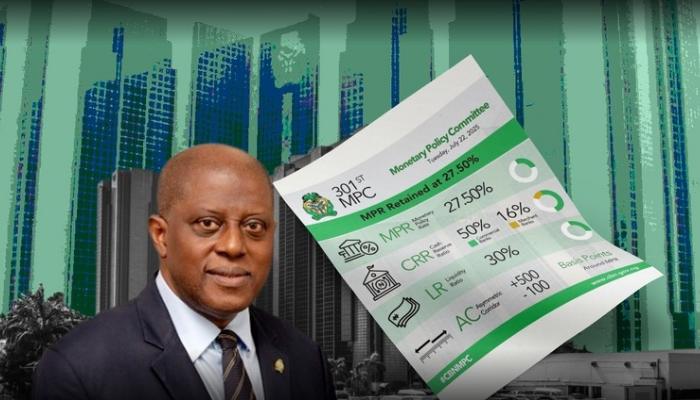
The Central Bank of Nigeria’s Monetary Policy Committee convenes its 307th meeting on 21 and 22 September 2026, with market data increasingly pointing toward a rate cut that could bring meaningful, if modest, relief to Nigerian businesses that have spent the better part of two years absorbing some of the highest commercial borrowing costs in the country’s recent history.
The decision, to be announced at the close of the two-day session, arrives against a backdrop of falling treasury bill yields, declining inflation, and renewed international institutional confidence in Nigeria’s economy.
What the treasury market is signalling
The clearest pre-meeting signal has come from the CBN’s primary treasury bill auction on 9 September 2026, where the apex bank allotted N1.054 trillion and cut the stop rate on the 364-day bill by 22 basis points to 16.62 per cent, the third consecutive reduction on that tenor. The cumulative decline of 97 basis points across three consecutive sessions, without any accompanying change in the Monetary Policy Rate, is unusual in a stable rate environment and typical of a market that expects policy easing ahead.
Investor behaviour reinforced the signal. Total bids reached approximately N2.64 trillion against N750 billion offered, a coverage ratio of 3.5 times, with demand heavily concentrated at the long end. Investors were paying to lock in one-year yields even as those yields fell, a pattern consistent with conviction that rates will be lower six to twelve months from now and that today’s 16.62 per cent, while declining, still represents attractive value relative to what the market expects to be available later.
When the market bids 3.5 times oversubscribed for one-year instruments at falling rates, it is not expressing uncertainty about where rates are going. It is expressing a view, and that view is that Nigerian interest rates are heading lower, faster than the MPR has moved so far.
Read also: Tinubu creates CBN-led council to regulate Nigeria’s crypto market
The macroeconomic case for a cut
Headline inflation fell to 15.43 per cent in July 2026, the most recent reading available, from a peak above 33 per cent in early 2024. The 11-month consecutive decline that preceded a brief uptick has given way to renewed moderation, with month-on-month core inflation easing dramatically to 0.15 per cent in July, a signal that the broad inflationary pressure embedded in the economy has substantially dissipated even as food prices remain elevated.
External reserves have reached $53.3 billion, the highest in 17 years, providing the CBN with the external stability buffer that allows policy easing without triggering foreign investor concern about the naira’s sustainability. Moody’s revised Nigeria’s credit outlook to positive in August. FTSE Russell confirmed Nigeria’s return to Frontier Market status on 21 September, the same day the MPC meeting opens.
The MPR has been held at 26.5 per cent since February 2026, following two 50-basis-point cuts in September 2025 and February 2026. Standard Chartered projects the rate will reach 25 per cent by year-end, implying one or two additional cuts before December.
Read also: Nigerian banks slashed N5.45tn in loans to 8 key sectors in 2025 as CBN ended forbearance
What it means for Nigerian businesses
For small businesses waiting for borrowing costs to fall, the MPC meeting on September 21-22 represents the next critical decision point. Commercial lending rates have remained above 30 per cent for most of 2026 despite the February cut, a reflection of the slow and asymmetric transmission from policy rates to actual lending rates that FirstBank CEO Olusegun Alebiosu and others have publicly flagged as a structural problem in Nigeria’s credit market.
A cut of 50 basis points from 26.5 to 26 per cent will not immediately produce 30 per cent lending rates becoming 25 per cent. But the direction and the signal matter, and a sustained easing cycle, combined with the treasury bill yield compression already visible in the market, creates the conditions under which commercial rates eventually follow.
Nigerian small businesses cannot borrow cheaply yet. But the market is pricing in a future where they can, and the MPC meeting on 21 September is the next step in that direction.