

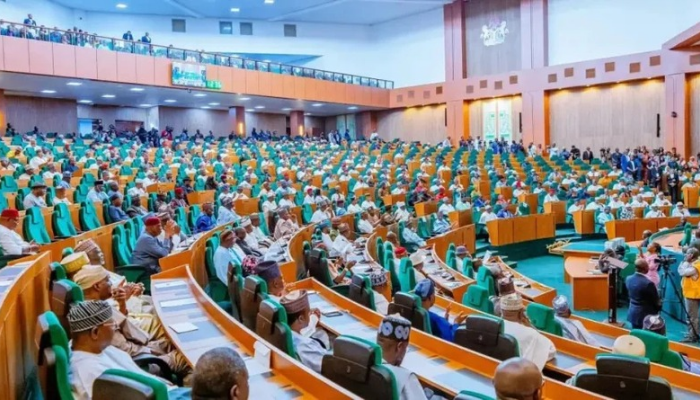
Nigeria’s House of Representatives has passed a motion calling on the Central Bank of Nigeria and commercial banks to urgently review lending conditions for micro, small, and medium enterprises, and directing the Federal Ministry of Industry, Trade and Investment to convene an emergency national summit on affordable SME finance within 30 days of the motion’s adoption. The motion, moved by lawmaker Salam and adopted in plenary, follows sustained evidence that Nigerian lending rates put businesses at a structural disadvantage compared with their counterparts in comparable African economies.
Read also: Cascador, Sterling Bank launch $200m SME Credit Backstop Fund
The numbers driving the motion
The lawmaker who moved the motion placed Nigeria’s SME lending rates in direct comparison with the rates available to small businesses in other African markets. SMEs in the CEMAC region access loans at approximately 10.97 per cent. Kenyan businesses borrowed at 16.6 per cent in 2024. South African SME rates stood at 10.7 per cent in 2025. US Small Business Administration-backed loans carry rates of between 8 and 13 per cent.
Against those benchmarks, Nigeria’s SME lending rates, which remain above 30 per cent at most commercial institutions despite the CBN’s September 2026 rate cut to 23 per cent, represent a cost of capital that makes most legitimate investment decisions financially unviable. A business generating a 20 per cent return on capital cannot service debt at 30 per cent and grow simultaneously. The choice between borrowing and surviving is the daily calculation that the motion’s data places in sharp relief.
Nigeria’s SME lending rates are not merely high. They are punitive relative to every comparable market in the region. The House of Representatives identifying that comparison by name is not a legislative technicality. It is a public acknowledgement that the current rate environment is a policy failure.
Read also: Tinubu says MSME clinics have created 650,000 new jobs
What the motion calls for
Beyond the emergency summit, the House called on the CBN, in consultation with deposit money banks, development finance institutions, and SME associations, to review monetary, prudential, and risk-pricing measures affecting lending to small businesses. The language specifically targets the full architecture of SME credit pricing, not just the benchmark rate.
High interest rates, stringent collateral requirements, and cumbersome loan application procedures were all identified as major barriers to business expansion, investment, and job creation. The motion’s framing reflects the understanding that the SME financing problem is not reducible to a single variable, and that any meaningful solution must address the collateral requirement, the documentation burden, and the risk-pricing framework simultaneously.
The House also urged lawmakers to demonstrate political will and institutional commitment in translating the resolutions into concrete economic relief for entrepreneurs, manufacturers, traders, innovators, and business operators across Nigeria.
Read also: GEA launches 2026 SME Accelerator, selects 40 businesses across 14 Nigerian states
The summit as a forcing mechanism
The 30-day deadline for an emergency national summit is a specific and time-bound accountability mechanism. Summits in Nigeria have a mixed record of translating into implementation, but the public commitment of a specific timeline creates a political cost for non-compliance and a platform at which SME associations, financial institutions, and regulators can be placed in the same room with explicit expectations of producing actionable outcomes.
Whether the House’s motion produces cheaper credit for Nigerian small businesses will depend on what the emergency summit produces, and whether the institutions summoned to it arrive with mandates to act rather than mandates to present.