

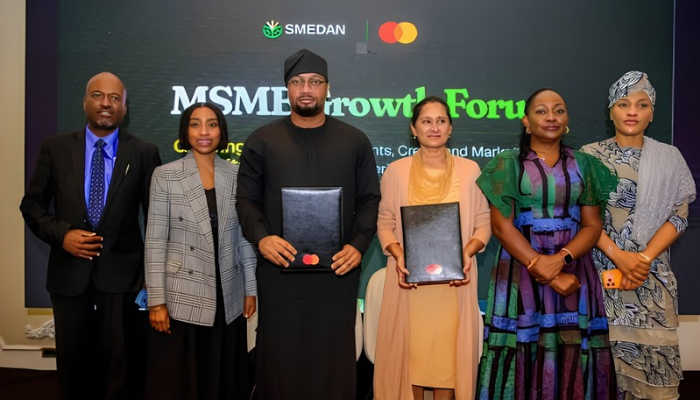
Mastercard and the Small and Medium Enterprises Development Agency of Nigeria have signed a Memorandum of Understanding to support small businesses with digital tools, skills development and wider participation in the formal economy.
The signing took place at the SMEDAN MSME Growth Forum, which brought together entrepreneurs, financial institutions, policymakers and ecosystem partners to discuss what Nigerian small businesses need to compete in the digital age. MSME Africa reported on 16 November that no grant, loan facility, funding amount or application deadline has yet been announced under the partnership.
Read also: SMEDAN puts N100m in grants on the table as GROW Nigerian conference opens Sunday
What the partnership covers
The two organisations aim to help SMEs adopt digital tools, improve operational efficiency and take part more fully in the formal economy. Tara Nathan, Executive Vice President for Growth Segments at Mastercard, said small businesses are the engine of economic growth, job creation and innovation, but many entrepreneurs still face barriers to digitisation, skills development and access to finance. Through the framework the MoU creates, she said, Mastercard and SMEDAN will explore ways to support Nigerian entrepreneurs as they build stronger, more resilient businesses.
Kari Tukur, Mastercard’s Country Manager for West Africa, Charles Odii, SMEDAN’s Director-General, and Benedict Itegbe, the Nigerian Export Promotion Council’s Regional Coordinator for the South-West, were among those at the forum.
The word to note in the statement is “explore”. The MoU sets a framework, not a funded programme, and small business owners should treat it as an opening to watch rather than an offer they can apply for today.
Read also: NAFDAC outlines 50% fee cut and assisted registration for small producers at SMEDAN summit
Why digital tools matter now
Mastercard’s own research points to the need. Its SME Confidence Index, released in July, found that all Nigerian SMEs surveyed agreed digital payments are critical to their future, that 69 per cent were seeking credit and that 63 per cent were using personal cards for business expenses. The company has also pledged to help digitally empower five million Nigerian businesses, a commitment it made during a September visit to President Tinubu.
Nigerian SMEs have also moved quickly on payments. Visa’s recent survey found that only 29 per cent of surveyed Nigerian SMEs use an integrated platform linking payments to the rest of their operations, which shows how much room remains between accepting digital payments and running a digitised business.
Read also: Keystone Bank, NACCIMA, SMEDAN train Nigerian SMEs on the skills banks actually want
What small business owners can do now
Owners cannot yet claim a benefit under the partnership, but they can prepare. SMEDAN business registration and a clear digital record of sales are the likely entry points for any programme the agency runs with a private partner. Businesses that already accept card or transfer payments can start keeping records of daily sales, which also strengthens a loan application.
SMEDAN’s agreements with private companies have increasingly rewarded businesses that are registered and documented. A small business that registers and keeps digital records now will be better placed when the partnership announces its first programme.