


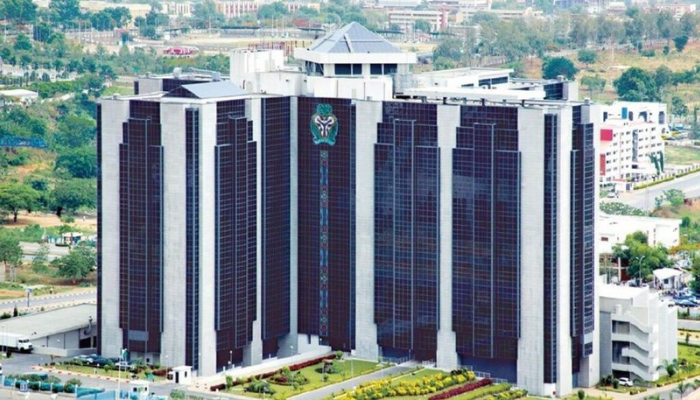
Nigeria’s banking sector delivered robust financial performance in the most recent reporting period, with leading lenders posting significant growth in profits, balance sheet size, and loan book expansion.
Analysts have attributed the sector’s resilience to the structural reforms introduced under CBN Governor Olayemi Cardoso since mid-2023, even as broader economic pressure on households and businesses persists.
Read also: CBN says SME lending is increasing but structural barriers remain
What the numbers show
The five largest Nigerian banks, Zenith Bank, Access Holdings, GTCo, UBA, and FBN Holdings, collectively reported pre-tax profits of approximately N3.2 trillion in their most recently published full-year results, with aggregate assets surpassing N100 trillion for the first time. Foreign exchange revaluation gains, driven by the naira’s depreciation following the 2023 liberalisation, contributed significantly to these figures in 2024, though analysts note that core banking income from lending, fees, and transaction volumes has also strengthened as the monetary environment has stabilised.
The completion of the CBN’s recapitalisation programme, which saw 33 banks raise N4.65 trillion in fresh capital by the March 31, 2026 deadline, has further strengthened balance sheets, positioning the sector to absorb shocks and expand lending into productive areas of the economy.
A banking sector that is structurally stronger and posting record profits creates the conditions for expanded credit to businesses. Whether those conditions translate into affordable loans for Nigerian SMEs remains the more important question.
Read also: CBN fixes May 19 for rate decision meeting as businesses push for further cuts
The reforms behind the results
Cardoso’s tenure has been marked by a series of consequential policy decisions: the unification and liberalisation of the foreign exchange market, the removal of petrol subsidies, the sharp tightening of monetary policy through multiple MPR increases, and the banking recapitalisation exercise. Each measure was painful in the short term but has contributed to improving Nigeria’s macroeconomic credibility, as reflected in S&P’s credit rating upgrade from B- to B on 15 May 2026, the country’s first such upgrade in 14 years.
Inflation has declined for 11 consecutive months, external reserves have reached $50.4 billion, and the naira has stabilised within a narrow trading band — all indicators that the reform agenda is producing measurable results.
Read also: CBN moves to fix N130 tn MSME funding gap through DFI overhaul
The gap that still needs closing
Despite the sector’s financial strength, the benefits have yet to reach the real economy at the pace that small businesses require. Commercial lending rates remain above 30 per cent annually, and over half of Nigerian SMEs have opted out of formal borrowing entirely. The Centre for the Promotion of Private Enterprise has consistently noted that recapitalised banks with stronger balance sheets do not automatically direct capital toward SMEs — particularly when government securities offer attractive, low-risk returns.
Nigeria’s banks are doing well by almost every financial metric. The test of whether the current reform cycle has truly succeeded will be measured not in profits, but in whether those profits are eventually matched by credit that reaches the entrepreneurs and businesses that drive employment and growth.