


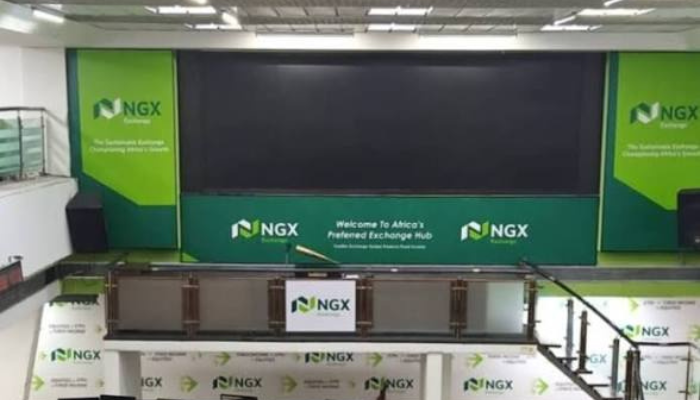
Four years after the Nigerian Exchange launched its Growth Board specifically to attract technology and growth-stage companies, not a single firm has listed on it. The board, which offered a dedicated pathway for startups and high-growth businesses to raise capital from public markets, has remained entirely vacant despite the strong performance of the broader NGX, its return to FTSE Frontier Market status, and Nigeria’s growing reputation as one of Africa’s most active startup ecosystems. The failure has renewed debate about what is preventing Nigerian technology companies from treating the capital market as a realistic growth financing option.
Read also: NGX reclaims Africa’s top stock market crown with 69.5% dollar return
What the Growth Board was designed to do
The NGX Growth Board was established as a lower-barrier listing alternative to the Main Board, with relaxed minimum requirements for market capitalisation, operating history, and financial track record. The intention was to create an accessible entry point for early-stage and growth-stage companies, particularly in technology, that could benefit from public market capital without meeting the standards required for a full Main Board listing.
The logic was sound. Nigeria’s startup ecosystem was growing rapidly at the time of the board’s launch, with increasing numbers of companies reaching stages where institutional equity funding was relevant and where the combination of public market credibility and broad-based retail capital access could support significant commercial growth.
But four years of vacancy suggest that the conditions the Growth Board requires and the conditions that Nigerian technology founders actually face have not aligned.
A stock exchange board that has been available for four years and has attracted zero listings is not a supply problem. It is a demand problem. The question is not whether the board exists. It is why the founders and investors who should be using it have collectively decided not to.
Read also: NGX, BOI take SME capital market financing drive to Kano
What founders say is holding them back
Analysis of the barriers cited by technology founders and their investors points to three interconnected concerns. First, policy inconsistency in Nigeria’s regulatory environment makes public company status particularly burdensome, as regulatory changes that affect listed companies can arrive without adequate notice or consultation, creating compliance risks that private companies avoid entirely.
Second, transparency requirements that come with a public listing, including mandatory quarterly and annual disclosures, related-party transaction reporting, and board governance standards, are viewed by many founders as premature for businesses that are still building operational systems and whose competitive advantage depends partly on information that would need to be disclosed.
Third, the pricing mechanism of Nigeria’s public markets is not well-calibrated for high-growth businesses whose value lies primarily in future potential rather than current earnings. Traditional equity market investors in Nigeria have historically valued companies on earnings multiples that do not reward the kind of growth-stage, loss-making, technology businesses for which the Growth Board was designed.
Read also: NGX group raises shareholder payouts following improved profitability
Why it matters for the broader ecosystem
The vacancy of the NGX Growth Board is not merely a capital market footnote. It reflects a structural gap in Nigeria’s business financing ecosystem between the venture capital and angel funding that takes businesses to early growth stage and the large-scale institutional capital that sustains expansion to national and continental scale.
In the absence of a functioning public market pathway, the only credible exit options for Nigerian startups and their investors are acquisition by larger companies or international listings, both of which export the ownership and the economic value of those businesses to outside Nigeria.
The Dangote Refinery IPO has demonstrated that Nigerian public markets can attract massive retail participation, institutional confidence, and international attention when the right conditions are created. What it has not yet demonstrated is whether the same market can work for the technology businesses that will define the next chapter of Nigeria’s economy.