


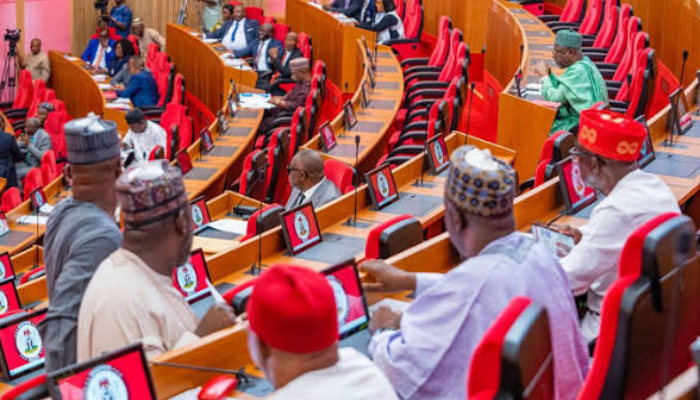
The Senate has urged the Federal Government to renegotiate Nigeria’s air services agreement with China so that Nigerian airlines can fly directly to Chinese airports, and to press Beijing to ease business visas for Nigerian traders. Lawmakers adopted the resolution by voice vote on Tuesday after a motion by Senate Leader Mohammed Tahir Monguno. Two Senate committees have four weeks to report on compliance.
Read also: China’s zero-tariff policy opens export window for Nigeria
What the Senate asked for
The resolution calls on the Ministry of Aviation and Aerospace Development to renegotiate and enforce the Bilateral Air Services Agreement, so that Nigerian carriers get the same access to China that Chinese airlines have in Nigeria. It also asks the Ministry of Foreign Affairs to open talks with Chinese authorities on business visa facilitation for Nigerian traders and on reciprocal airport slots for Nigerian airlines. Monguno suggested temporary airport fee waivers to help Nigerian carriers launch routes.
Senate President Godswill Akpabio said Nigeria may have to consider stopping Chinese airlines from flying directly into the country if China will not reciprocate. The Senate also turned down a proposal to revive Nigeria Air, saying the idea needs a separate motion, and urged the government to look at establishing a viable national carrier.
Read also: Flutterwave hosts Africa Forward forum, stablecoins and cross-border payments take centre stage
Why traders care
Senators said Nigerian businesspeople heading to China have to connect through Ethiopia, Kenya, Morocco, the United Arab Emirates or the United Kingdom, while Chinese carriers fly straight into Nigeria. Monguno cited bilateral trade of $18 billion in the first half of 2025, up 35 per cent on the previous year. Lawmakers also said far more Chinese nationals live in Nigeria than Nigerians in China. Those population figures came from senators during debate and were not independently verified.
The resolution lists the expected benefits: shorter travel times, better supply chain efficiency, less capital flight, more revenue for Nigerian airports, support for SME growth and non-oil exports, and faster movement of perishable goods. For small importers who source stock in China, a direct route could cut both travel costs and time away from the business.
What it takes to deliver
A Senate resolution urges. It does not change a treaty. The text itself notes that enforcement depends on executive instruments from the Aviation Ministry, the Nigerian Civil Aviation Authority, the Central Bank of Nigeria and the Nigeria Customs Service. The agreement was signed under former President Muhammadu Buhari, and Senator Abdul Ningi named Air Peace, United Nigeria Airlines, Azman Air and Ibom Air as possible operators, subject to regulatory requirements.
Cost is the harder question. Nigerian airlines came close to suspending flights earlier this year when Jet A1 prices rose from roughly N900 to over N3,300 per litre between late February and mid April. A long-haul route to China is expensive to run, and reciprocal rights alone will not make it profitable.
Read also: FG endorses $25bn Nigeria–Morocco gas pipeline, plans revival of abandoned projects
What it means for small businesses
For small importers, the visa is as important as the flight. Business visas that are slow or costly to obtain limit who can travel to source goods, whatever the route. Traders will want to see whether the Foreign Affairs Ministry puts visa facilitation on the table, since that is a diplomatic matter and one that does not depend on airline economics.
The four-week reporting deadline gives the first test. If the committees report real progress, traders could see a change in routes and fares. If not, the resolution will join a long list of calls that never reached the negotiating table.