


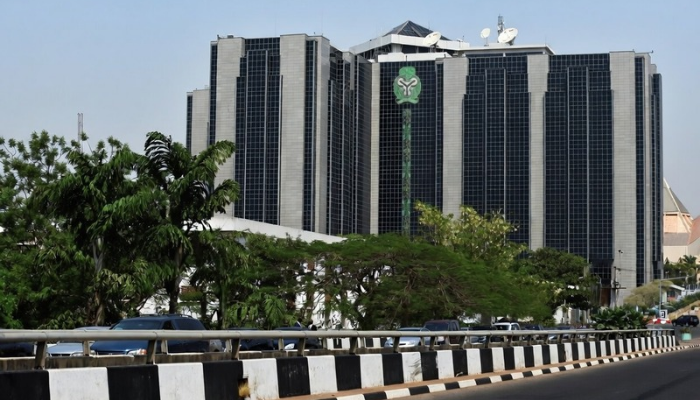
Nigerian commercial banks increased their lending to the Federal Government by N15.66 trillion over the twelve months to April 2026, new data from the Central Bank of Nigeria shows, raising fresh concerns about the pace at which public sector borrowing is crowding out credit to businesses and households. The figures, drawn from the apex bank’s latest money and credit statistics, reveal a credit market increasingly tilted towards government financing at the expense of the private sector activity that drives employment and economic output.
Read also: Nigeria’s banks post strong growth as CBN reforms begin to reshape the financial system
What the numbers reveal
Credit to the government climbed from N23.93 trillion in April 2025 to N39.60 trillion in April 2026, a year-on-year increase of 65.4 per cent. Over the same period, net domestic credit expanded from N102 trillion to N120.18 trillion, a total rise of N18.18 trillion. Of that increase, government borrowing accounted for N15.66 trillion, meaning nearly nine out of every ten naira added to domestic credit over the past year went to the public sector rather than to businesses or consumers.
The share of government credit within total net domestic credit also rose from 23.46 per cent to 32.95 per cent, confirming a structural drift away from productive sector lending. Private sector credit, meanwhile, increased by only N2.52 trillion over the same period and actually contracted from N94.61 trillion in February 2026 to N80.59 trillion in April, suggesting that even the modest gains recorded earlier in the year have since reversed.
Read also: Retail loans contract even as Nigeria’s consumer credit rises to N3.81trn
Why banks are choosing government paper
Banks have shown a consistent preference for government securities throughout this period, drawn by the combination of attractive yields, lower risk weighting, and the predictability of public sector repayment. Despite the CBN reducing the Monetary Policy Rate by 50 basis points to 26.5 per cent at its 304th MPC meeting in February, private sector lending has continued to contract rather than expand.
Investment analyst Johnson Chukwu noted that banks gravitate towards lower-risk assets when economic uncertainty remains elevated, and that government securities have continued to offer returns that private lending struggles to match after accounting for default risk and the cost of credit monitoring. Economist Muda Yusuf was more direct in his concern, saying the continued increase in government borrowing from the banking system raises worries about crowding out private sector credit at a time when businesses need financing to expand production and create jobs.
Read also: Nigerian banks complete N4.65 trillion recapitalisation as CBN eyes SME lending boost
What it means for Nigerian SMEs
The data paints a difficult picture for small and medium-sized enterprises operating in an environment where the credit available to them from commercial banks is shrinking in both absolute and relative terms. SMEs are among the borrowers most affected by tight lending conditions because they typically lack the collateral profiles, credit history, or scale that allow larger corporates to access alternative financing channels.
When banks direct the bulk of their loan books towards government securities and away from productive sector lending, small businesses are disproportionately left behind. The CBN’s April data suggest that despite policy easing and the completion of the banking sector recapitalisation programme that raised N4.65 trillion in new capital, the credit impact on the real economy remains limited. Sustained improvement in private sector lending will likely require not just lower rates but direct policy incentives that make SME lending more commercially attractive for banks operating in an environment where government paper remains a highly competitive alternative.